
how-to
Cups to mL and Grams: The Baking Conversion Guide That Actually Works
By Uttam Regmi · Published 2026-07-04 · Updated 2026-07-04 · 5 min read · Fact-checked, sources cited
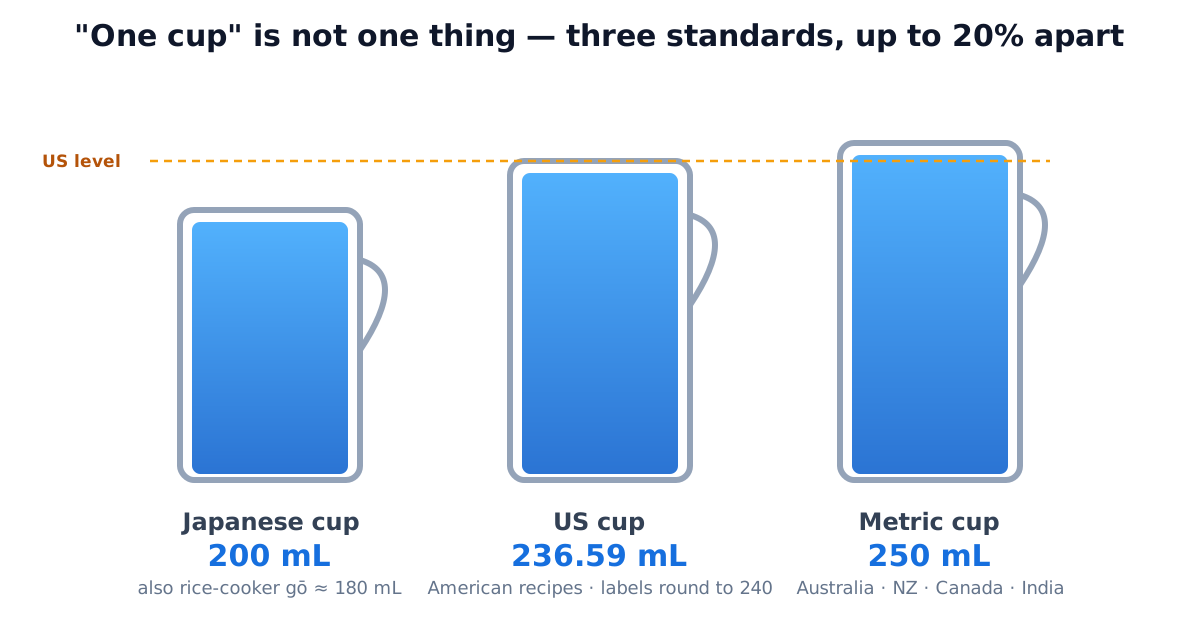
One US cup is 236.59 mL, but “a cup” is not one thing worldwide. Australia and New Zealand bake with a 250 mL metric cup, Japan with a 200 mL cup, and older UK recipes with a 284 mL breakfast cup. That spread, up to 20% between systems, is behind a large share of “the recipe failed” stories. Convert any amount exactly with the cups to mL converter, which runs entirely in your browser.
The cup systems of the world
| Cup standard | mL | Where you’ll meet it |
|---|---|---|
| US customary cup | 236.59 | American recipes (the default online) |
| US “legal” cup | 240 | US nutrition labels |
| Metric cup | 250 | Australia, NZ, Canada (modern), India |
| Japanese cup | 200 | Japanese recipes, rice cookers* |
| UK breakfast cup (legacy) | 284 | pre-1970s British cookbooks |
*Rice-cooker “cups” are their own thing: the gō, 180 mL. If your rice cooker came with a small plastic cup, that’s it.
The dangerous pair is US 236.59 vs metric 250, close enough to seem interchangeable, different enough (5.7%) to change a batter across several cups. When a recipe’s origin is unclear, assume US if it’s from a US site; convert exactly rather than eyeballing.
Cups to grams: the density problem
A cup is a volume; a gram is a weight, so “1 cup in grams” depends entirely on what’s in the cup. The reference table for common baking ingredients (US cup, spooned and leveled):
| Ingredient | 1 US cup ≈ grams | 1 US cup ≈ oz |
|---|---|---|
| All-purpose flour | 120 g | 4.2 oz |
| Granulated sugar | 200 g | 7.1 oz |
| Brown sugar (packed) | 220 g | 7.8 oz |
| Powdered sugar | 120 g | 4.2 oz |
| Butter | 227 g | 8.0 oz (2 sticks) |
| Milk / water | 237-240 g | 8.4 oz |
| Cocoa powder | 85 g | 3.0 oz |
| Rolled oats | 90 g | 3.2 oz |
| Honey / syrup | 340 g | 12.0 oz |
| Rice (uncooked) | 185 g | 6.5 oz |
Water is the anchor: 1 mL weighs 1 g, so a cup of water is ~237 g. Everything lighter (flour, cocoa) or heavier (honey) departs from that. For weight conversions between metric and US units, the grams to ounces converter covers the exact math.
⚠️ The flour trap "1 cup flour" spans 120-150 g depending on whether you spoon it in gently or scoop and pack it. That 25% swing is the single most common cause of dense cakes and dry cookies. Fluff, spoon, level, or better, weigh.
Spoons: the small print
- 1 US tablespoon = 14.79 mL, functionally the metric 15 mL tablespoon
- 3 teaspoons = 1 tablespoon; 16 tablespoons = 1 cup
- 1 US teaspoon = 4.93 mL ≈ metric 5 mL
- Australian tablespoon = 20 mL (four teaspoons), the classic trans-Tasman recipe pitfall
- UK recipes’ “dessertspoon” = 10 mL, halfway between teaspoon and tablespoon
Convert any spoon amount with tbsp to mL or tsp to mL.
Scaling recipes without wrecking them
Doubling works cleanly for volumes and weights, with three caveats bakers learn the hard way:
- Leaveners don’t scale linearly past 2×, baking powder/soda often need only ~1.5× when tripling, or bakes taste metallic and rise unevenly.
- Pan area, not volume, drives baking time. A doubled batter in the same pan bakes far longer and drier; use two pans or a pan with ~2× the base area.
- Salt scales to taste, not math, scale to ~80% and adjust.
💡 Tip Converting a whole US recipe to metric? Convert the liquids with cups→mL, look up the solids in the grams table above, and round to friendly numbers (236.59 → 235 or 240 mL), recipe tolerances absorb 1-2% easily. The one place not to round casually: leaveners.
Why weight beats volume (and always has)
Professional kitchens and serious home bakers work in grams for three reasons: accuracy (a scale doesn’t care about compaction, humidity or scooping style), speed (tare the bowl, pour to the number, no washing six measuring cups), and scaling (percentages of flour weight, “baker’s percentages”, make any batch size trivial). A 20-dollar kitchen scale removes the entire class of cup-conversion errors this article exists to fix. Until then, the converters keep the math exact even when the cups aren’t.
Common baking conversion mistakes
- Using a metric 250 mL cup for a US recipe, 5.7% extra per cup compounds across a batter.
- Scooping flour from the bag, packs up to 150 g into a “120 g” cup; fluff, spoon, level, or weigh.
- Assuming all tablespoons match, Australian tablespoons are 20 mL, not 15.
- Converting solids to grams by volume alone, a cup of honey (340 g) is nearly triple a cup of cocoa (85 g); density decides, use the ingredient table.
- Rounding leaveners like liquids, baking soda tolerates far less error than milk; measure it precisely even when everything else is approximated.
Quick summary
A US cup is 236.59 mL; metric cups are 250 mL and Japanese cups 200 mL, check the recipe’s origin before measuring, and convert liquids exactly with the cups to mL converter. For solids, volume needs density: use the grams table above, or better, a kitchen scale, weight is the only measurement that doesn’t care how you scooped.
All volume conversions use exact US customary definitions (1 US cup = 236.588 mL, derived from the 231-cubic-inch gallon), verified in our public test suite. Related: mL to cups · fluid ounces to mL · liters to quarts.
Frequently asked questions
How many mL is 1 cup?
A US customary cup is 236.59 mL (recipes and nutrition labels often round to 240 mL). A metric cup, used in Australia, NZ and much of the world, is exactly 250 mL, and a Japanese cup is 200 mL. American recipes mean the 236.59 mL cup.
How many grams is 1 cup of flour?
About 120 g for all-purpose flour, spooned and leveled, but scooping straight from the bag packs in up to 150 g. This 25% variance is why serious baking recipes give weights.
How many tablespoons are in a cup?
16 US tablespoons make 1 US cup; 3 teaspoons make 1 tablespoon (14.79 mL, effectively the metric 15 mL). Note Australian tablespoons are 20 mL, four teaspoons, not three.
Why do my US-recipe bakes fail with my metric cup?
A 250 mL metric cup holds about 5.7% more than the 236.59 mL US cup. On liquids and flour combined, that compounds enough to shift batter consistency, use the converter or weigh instead.
Is it better to weigh ingredients or use cups?
Weighing wins for accuracy and repeatability: volume measurements of powders vary with compaction by 20%+ while a scale is exact. Professional recipes are written in grams for exactly this reason.
How many cups is 500 mL?
500 mL is 2.11 US cups (or exactly 2 metric cups). The ml-to-cups converter handles any value at any precision.