
explainer
BPM to Delay Time: The 60,000 Rule Every Producer Should Know
By Uttam Regmi · Published 2026-07-18 · Updated 2026-07-18 · 4 min read · Fact-checked, sources cited
Quarter-note delay time in milliseconds = 60,000 ÷ BPM. At 120 BPM that’s 500 ms; at 90 BPM it’s 667 ms. Every other subdivision comes from that one number, halve it for eighths, quarter it for sixteenths, multiply by 1.5 for dotted, by ⅔ for triplets. The reason 60,000 appears is simply that there are 60,000 milliseconds in a minute, and BPM is beats per minute.
Where the number comes from
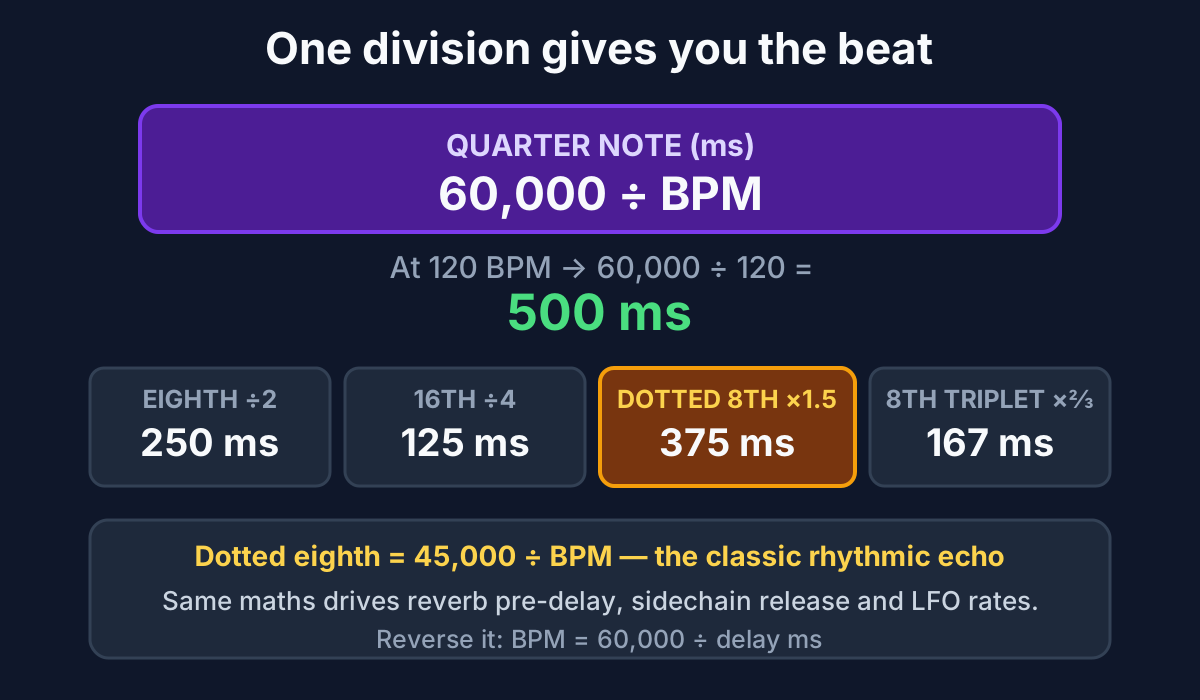
A minute is 60 seconds, 60,000 milliseconds. BPM means beats per minute, and one beat is a quarter note in common time. So:
quarter note (ms) = 60,000 ÷ BPM
At 120 BPM: 60,000 ÷ 120 = 500 ms. At 140 BPM: ≈ 429 ms. At 75 BPM: 800 ms.
That’s the whole thing. Every other value is that number scaled.
The subdivision table
| Note value | Multiplier | Formula | At 120 BPM |
|---|---|---|---|
| Whole | ×4 | 240,000 ÷ BPM | 2,000 ms |
| Half | ×2 | 120,000 ÷ BPM | 1,000 ms |
| Quarter | ×1 | 60,000 ÷ BPM | 500 ms |
| Eighth | ×0.5 | 30,000 ÷ BPM | 250 ms |
| Sixteenth | ×0.25 | 15,000 ÷ BPM | 125 ms |
| Dotted quarter | ×1.5 | 90,000 ÷ BPM | 750 ms |
| Dotted eighth | ×0.75 | 45,000 ÷ BPM | 375 ms |
| Quarter triplet | ×⅔ | 40,000 ÷ BPM | 333 ms |
| Eighth triplet | ×⅓ | 20,000 ÷ BPM | 167 ms |
The BPM delay calculator prints the whole table for any tempo. If you don’t know the tempo, tap it out first.
Dotted and triplet, in one line each
- Dotted = the note plus half itself again → ×1.5. A dot adds 50% of the note’s duration.
- Triplet = three in the space of two → ×⅔. Each note is two-thirds the normal length.
Why the dotted eighth is everywhere
Set a delay to a dotted eighth (0.75 of a beat) and the echoes don’t land on the beat. They land three sixteenths later, repeatedly, drifting across the bar before realigning. Against a straight eighth-note part, that creates the interlocking, galloping pattern heard on countless pop and rock records, most famously in U2’s guitar sound.
It’s a rhythmic trick, not a timbral one: a single note becomes a pattern. That’s why it’s the first delay setting worth learning after the plain quarter.
Practical tip: pair it with feedback around 25-40% and roll off some high end in the repeats so the echoes sit behind the dry signal rather than competing with it.
It’s not just delay
The same arithmetic drives most time-based settings in a mix:
- Reverb pre-delay. A pre-delay of a sixteenth or a thirty-second (say 60-125 ms at 120 BPM) separates the dry signal from the tail, keeping vocals intelligible while still sounding large.
- Reverb decay. Setting the tail so it has largely died away before the next downbeat keeps dense mixes from turning to mush. At 120 BPM a bar is 2 seconds, so a 1.8 s decay clears itself; a 4 s decay smears across bars. The reverb time calculator works this out.
- Sidechain / compressor release. Matching release to an eighth or sixteenth lets the pump recover in time for the next hit.
- Tremolo, auto-pan and filter LFOs. Rate in Hz = 1000 ÷ (delay time in ms), so a quarter-note LFO at 120 BPM is 2 Hz.
- Noise gates and stutter effects, where the hold time is a subdivision.
When not to sync
Tempo-synced times aren’t a rule, they’re a default:
- Slapback echo (roughly 60-120 ms) is usually set by ear, not by tempo, it’s heard as thickening rather than rhythm.
- Doubling and chorus-style delays (10-40 ms) are below the threshold where we perceive separate events at all.
- Deliberate looseness. Nudging a synced delay a few milliseconds off can make it feel more human, the same way a slightly-behind snare feels laid back.
The rule of thumb: if you want the effect to be heard as rhythm, sync it. If you want it heard as space or thickness, set it by ear.
Going the other way
To convert a delay time back to tempo: BPM = 60,000 ÷ delay time (ms). A 400 ms quarter note is 150 BPM. Useful for matching a tempo to a sample or a loop you’ve been handed without metadata.
Frequently asked questions
What is the formula for BPM to delay time?
Quarter-note delay time in milliseconds equals 60,000 divided by BPM. The 60,000 comes from the number of milliseconds in a minute, since BPM means beats per minute.
What is the delay time at 120 BPM?
At 120 BPM a quarter note is 500 ms (60,000 divided by 120). An eighth note is 250 ms, a sixteenth is 125 ms, and a dotted eighth is 375 ms.
How do I calculate a dotted eighth delay?
A dotted note is 1.5 times its base value, so a dotted eighth delay equals 45,000 divided by BPM. At 120 BPM that is 375 ms. It is the classic rhythmic-echo delay setting in pop production.
How do I get eighth, sixteenth, and triplet delay times?
Start from the quarter note (60,000 divided by BPM), then scale it: halve it for an eighth, quarter it for a sixteenth, double it for a half note, multiply by 1.5 for dotted, and by two-thirds for triplets.
Why should I sync delay time to tempo?
Tempo-synced delay times land with the groove so echoes reinforce the rhythm, while arbitrary times blur it. The same tempo-based values also work for reverb pre-delay, sidechain release, tremolo and gate rates.