
explainer
How Much Chocolate Is Toxic to Dogs? (Type, Weight & Dose Explained)
By Uttam Regmi · Published 2026-07-13 · Updated 2026-07-13 · 5 min read · Fact-checked, sources cited
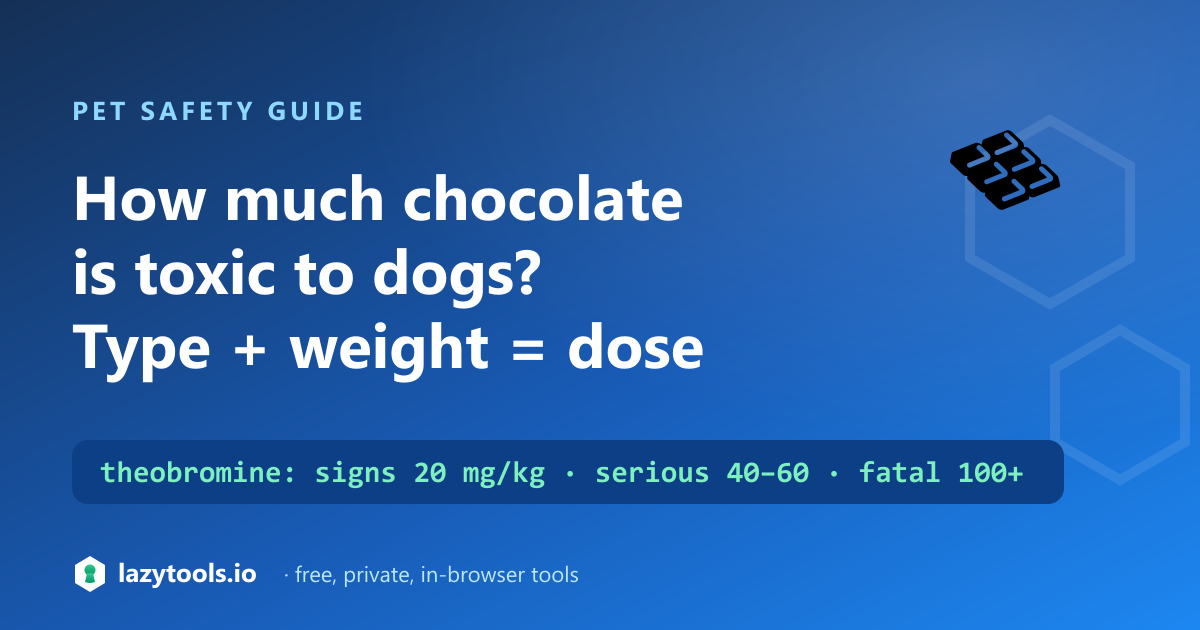
If your dog has eaten chocolate, call your vet or a pet poison helpline now, don’t wait for symptoms. With that said, here’s the honest answer to “how much is too much”: it depends on two things, the type of chocolate (how much theobromine it contains) and your dog’s body weight. A few squares of milk chocolate might barely register for a Labrador but seriously harm a Chihuahua, and the same weight of dark or baking chocolate is several times more dangerous.
Why chocolate is poisonous to dogs
Chocolate contains theobromine, a methylxanthine chemically related to caffeine (which chocolate also contains in smaller amounts). Humans metabolise theobromine quickly, but dogs break it down far more slowly, its half-life in a dog is roughly 17.5 hours, so it builds up and keeps acting for a day or more. At high enough doses it overstimulates the heart and nervous system.
The key insight is that toxicity is a dose per body weight problem, measured in milligrams of theobromine per kilogram. That’s why a small dog and a large dog eating the same bar face very different risks.
The risk thresholds vets use
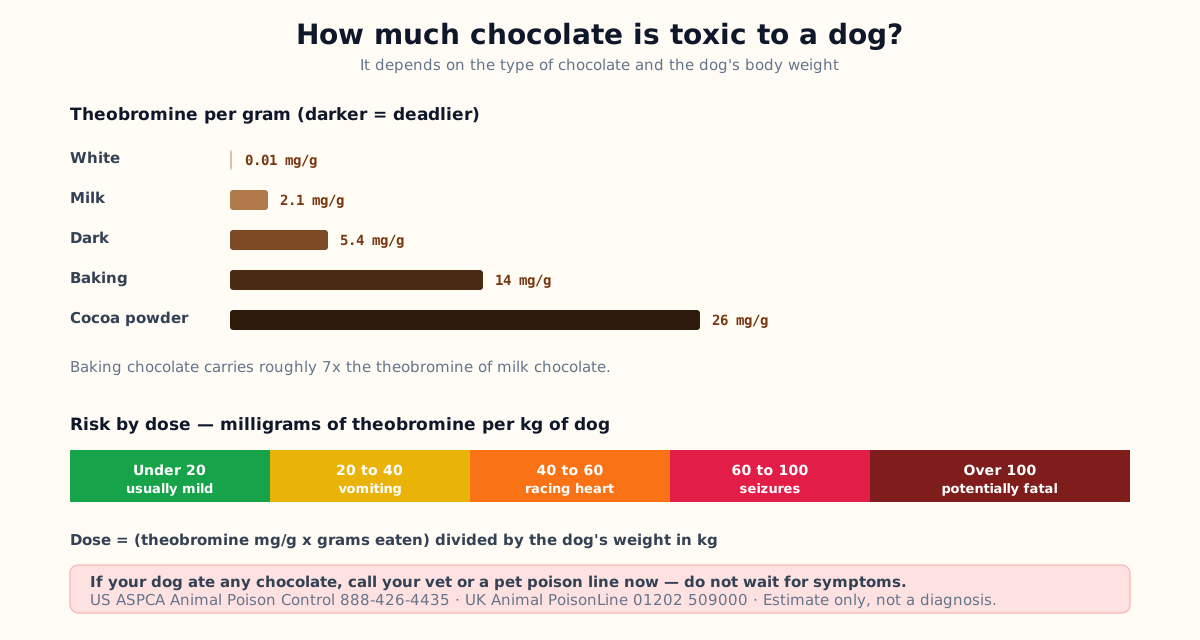
Published veterinary references (the Merck Veterinary Manual, Chocolate Toxicosis in Animals and pet poison-control services) band the risk roughly like this, per kilogram of the dog’s weight:
| Theobromine dose | What tends to happen |
|---|---|
| Under 20 mg/kg | Often no signs, or mild stomach upset |
| 20-40 mg/kg | Vomiting, diarrhoea, restlessness, extreme thirst |
| 40-60 mg/kg | Racing/irregular heartbeat, tremors, agitation |
| 60-100 mg/kg | Seizures, dangerous heart rhythms |
| Over ~100 mg/kg | Potentially fatal |
These are guidelines, not guarantees, individual dogs vary, and older dogs (you can estimate a dog’s age in human-equivalent years with the dog age calculator) or those with heart conditions are more vulnerable.
How much theobromine is in each chocolate type
Content varies by product, but typical mid-range figures are:
| Chocolate type | Theobromine (approx.) |
|---|---|
| White chocolate | ~0.009 mg/g (negligible) |
| Milk chocolate | ~2.1 mg/g |
| Dark / semisweet | ~5.4 mg/g |
| Baking (unsweetened) | ~14 mg/g |
| Cocoa powder | ~26 mg/g |
So gram for gram, baking chocolate is roughly 7× as dangerous as milk chocolate, and cocoa powder more still.
A worked example
Say a 10 kg dog eats 50 g of milk chocolate (about half a large bar):
- Theobromine ≈ 2.1 mg/g × 50 g = ≈ 103 mg
- Dose ≈ 103 mg ÷ 10 kg = ≈ 10 mg/kg → below the 20 mg/kg threshold, likely mild.
Now swap in 50 g of dark chocolate:
- Theobromine ≈ 5.4 mg/g × 50 g = ≈ 268 mg
- Dose ≈ 268 ÷ 10 = ≈ 27 mg/kg → into the “expect vomiting and restlessness” band.
The dog chocolate toxicity calculator does this maths for you and shows the risk band, but it’s an estimate, not a diagnosis.
What to do if your dog ate chocolate
- Don’t wait for symptoms, theobromine is slow, so signs can be hours away. Act now.
- Work out what and how much: the type of chocolate, roughly how much, and your dog’s weight. Keep the wrapper.
- Call for advice: your vet, or a pet poison line, US ASPCA Animal Poison Control 888-426-4435, UK Animal PoisonLine 01202 509000.
- Follow their instructions. Don’t try to make your dog vomit unless a professional tells you to.
- Watch for signs over the next 24-72 hours: vomiting, diarrhoea, hyperactivity, a pounding heart, tremors or seizures.
The good news: with prompt treatment, most dogs recover well. The danger comes from waiting.
Frequently asked questions
How much chocolate can kill a dog?
Roughly, a theobromine dose over about 100 mg/kg of body weight can be fatal. That’s around 50 g of baking chocolate for a 10 kg dog, or a much larger amount of milk chocolate. But dogs can become seriously ill well below the lethal dose, so any chocolate ingestion warrants a call to your vet.
Is a small amount of chocolate OK for dogs?
There’s no amount of chocolate that’s good for a dog. A tiny lick of milk chocolate is unlikely to harm a large dog, but the same amount is riskier for a small one, and darker chocolate raises the stakes sharply. It’s safest to keep all chocolate out of reach.
Which chocolate is most dangerous?
Baking (unsweetened) chocolate and cocoa powder contain the most theobromine, followed by dark/semisweet, then milk chocolate. White chocolate has almost none, so theobromine poisoning is unlikely, though its fat and sugar can still cause stomach upset or pancreatitis.
How long after eating chocolate will a dog show symptoms?
Signs typically appear within 6-12 hours and can last 24-72 hours because dogs clear theobromine so slowly. This delay is exactly why you should act immediately rather than waiting to see if your dog “seems fine.”
My dog ate white chocolate, should I worry about theobromine?
Theobromine poisoning is unlikely from white chocolate because it contains almost none. However, the high fat and sugar can trigger vomiting, diarrhoea or pancreatitis, so still monitor your dog and call your vet if it ate a large amount or shows signs of illness.
Can dogs recover from chocolate poisoning?
Yes, with prompt veterinary care, most dogs recover fully. Treatment may include inducing vomiting, activated charcoal, IV fluids and heart monitoring. Outcomes are best when owners act quickly rather than waiting for symptoms to worsen.
Frequently asked questions
How much chocolate is toxic to a dog?
It depends on the theobromine dose relative to your dog's body weight, not a fixed amount. Signs can appear from around 20 mg/kg, serious heart and nerve effects from 40 to 60 mg/kg, and doses over roughly 100 mg/kg can be fatal.
What makes chocolate poisonous to dogs?
Chocolate contains theobromine, a caffeine-like methylxanthine. Dogs break it down very slowly (half-life around 17.5 hours), so it builds up and overstimulates the heart and nervous system at high enough doses.
Which chocolate is most dangerous for dogs?
Darker chocolate is deadlier because it holds more theobromine. Baking chocolate and cocoa powder have the most, dark chocolate is high, milk chocolate far less, and white chocolate has almost none.
My dog ate chocolate but seems fine. Should I still worry?
Yes. Because theobromine clears slowly, symptoms can be delayed for hours, so a dog that seems fine now can still be at risk. Call your vet or a pet poison helpline right away rather than waiting for signs.
Who should I call if my dog ate chocolate?
Contact your vet or a pet poison-control service immediately. In the US, the ASPCA Animal Poison Control Center is 888-426-4435; in the UK, Animal PoisonLine is 01202 509000.