
how-to
Oven to Air Fryer Conversion (The 25°F Rule)
By Uttam Regmi · Published 2026-07-28 · Updated 2026-07-28 · 6 min read · Fact-checked, sources cited
To convert an oven recipe to an air fryer, lower the temperature by about 25 °F (≈15 °C) and cut the cooking time by roughly 20%, and apply both changes together. That single adjustment covers most recipes: an air fryer is really a small, powerful convection oven, so its fast-moving hot air cooks quicker and browns harder than a conventional oven. This guide gives you the rule, a ready-to-use oven to air fryer chart, and a worked example, plus the air fryer conversion calculator that does the math for you in your browser.
The air fryer conversion rule
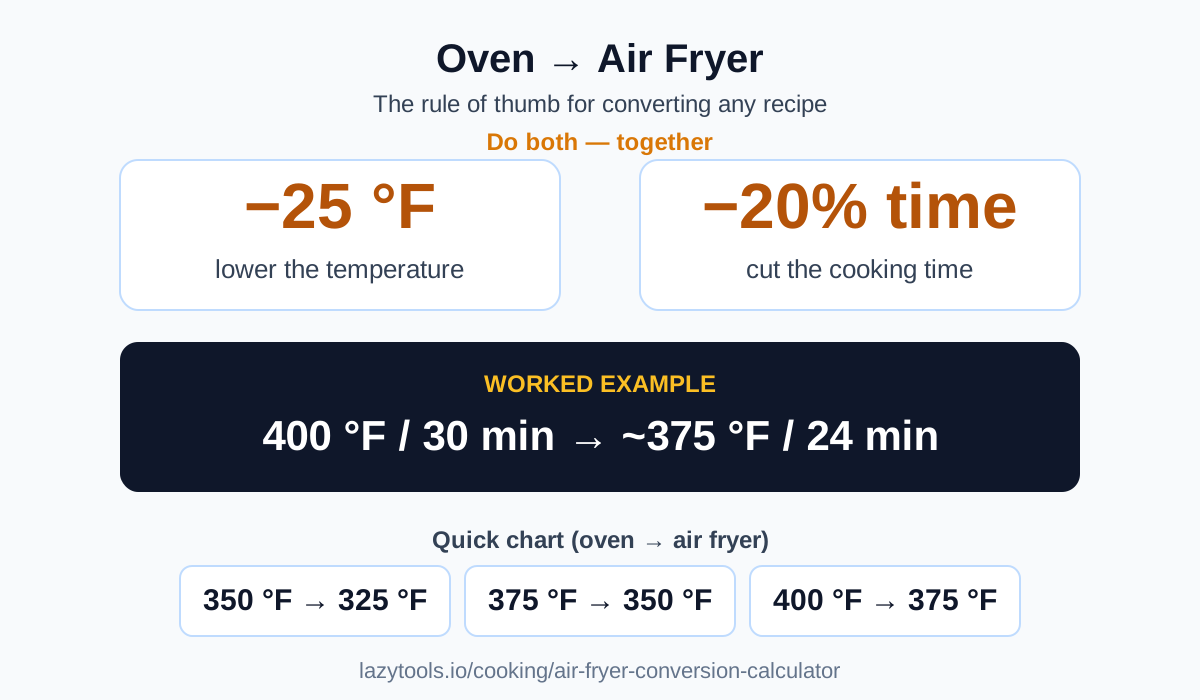
The most widely used rule of thumb has two parts, and you apply both at once:
- Lower the temperature by about 25 °F (≈15 °C). So a 400 °F oven setting becomes roughly 375 °F in the air fryer.
- Cut the cooking time by about 20%. So 30 minutes becomes roughly 24 minutes.
Why both? An air fryer’s fan drives hot air around a small chamber, so the surface of the food heats faster (that’s the time cut) and browns more aggressively (that’s the temperature cut). Lower only the temperature and the food can still overcook because it’s cooking so much quicker; shorten only the time and the outside can scorch before the inside is done. Together, the two adjustments keep the browning and the internal cooking roughly in balance, which is what you want from a good roast, a crisp tray of vegetables, or a batch of fries.
A quick way to remember it: round the temperature down one dial notch and knock about a fifth off the clock. For most home ovens, one common notch is 25 °F, and a fifth of the time is close enough to the 20% figure that you don’t need precise arithmetic to get started.
Treat this as a starting point, not an exact formula. The −25 °F, −20% figure is the widely used rule of thumb, not a law of physics. Air fryers differ a lot in wattage and basket size, a small 1,000-watt basket model and a large 1,800-watt oven-style unit will not behave identically, so the first time you make a dish, check for doneness a few minutes before the calculated time is up. Once you’ve seen how your particular machine behaves, you can nudge the numbers up or down and trust them for next time.
Oven to air fryer chart
Here’s the rule applied to common oven settings and times. Temperatures are rounded to practical dial settings, and times use the −20% cut. These come straight from the rule, nothing food-specific is invented.
| Oven setting | Air fryer temp (−25 °F) | Oven time | Air fryer time (−20%) |
|---|---|---|---|
| 350 °F | ~325 °F | 20 min | ~16 min |
| 375 °F | ~350 °F | 25 min | ~20 min |
| 400 °F | ~375 °F | 30 min | ~24 min |
| 425 °F | ~400 °F | 40 min | ~32 min |
You can mix and match, pick the temperature row closest to your recipe and the time that matches your recipe’s minutes. For anything in between, the air fryer conversion calculator applies the exact −25 °F and −20% math for any starting temperature and time.
Worked example: a tray bake that calls for 400 °F for 30 minutes converts to about 375 °F for 24 minutes in the air fryer. Set the timer for 24 minutes, but glance at it around the 20-minute mark the first time.
Why air fryers cook faster
An air fryer isn’t a deep fryer and it isn’t magic, it’s a compact convection oven. A heating element sits close to the food and a fan circulates the hot air rapidly through a small basket. Two things follow from that design:
- Speed. In a big conventional oven, a lot of energy goes into heating a large volume of air and the oven walls. In an air fryer, the chamber is tiny and the fan is fast, so hot air reaches the food’s surface quickly and constantly. That’s why you can shave off around a fifth of the time.
- Browning. Fast-moving hot air pulls moisture off the surface efficiently, so food crisps and browns faster. That extra browning power is exactly why you dial the temperature down, otherwise the outside gets ahead of the inside.
Understanding this also explains the rule’s limits: the air needs room to move. Crowd the basket and you lose both the speed and the crisping, because the food shields itself from the moving air and starts to steam in its own moisture. It’s the same reason a single layer of chips crisps beautifully while a heaped basket comes out pale and soft. When a recipe makes more than fits in one comfortable layer, the fix is simple, cook it in two or three batches rather than trying to squeeze it all in at once. The extra few minutes are worth it for an even, crisp result across the whole batch.
Foods that need extra care
The rule works well for the things air fryers are famous for, anything you’d normally roast or bake to a crisp finish. A few categories need a lighter touch:
- Very saucy or liquid dishes (stews, brothy bakes, anything with a lot of loose liquid) don’t transfer well. Rushing air can’t do much with a pool of sauce, and splatter is a real risk. These are usually better left in the oven.
- Delicate batters (thin, wet, unset batters) can blow around or cook unevenly in the moving air. If you’re unsure, the oven is the safer bet.
- Meat and poultry. The conversion gets you close on timing, but for anything where safety matters, confirm doneness with an instant-read thermometer against a safe internal temperature. Temperature, not time, is the true test. If you’re roasting a joint or a bird, our roast cooking time calculator and turkey cooking time calculator give you weight-based timing and safe internal temperatures to aim for.
Common mistakes
A handful of small habits trip people up when they first move recipes into the air fryer:
- Overcrowding the basket. This is the number one mistake. Air circulation is the whole point, pile food in and it steams instead of crisping. Leave space, or cook in batches.
- Forgetting to shake or flip. Food sits in one spot in the basket, so shake it (for small pieces) or flip it (for larger ones) about halfway through for even cooking and colour.
- Not checking early. Because machines vary, always check for doneness a few minutes before the calculated time on your first attempt. You can always cook longer; you can’t un-cook.
- Converting saucy dishes. As above, loose, liquid recipes are the wrong fit. Don’t force them.
- Trusting time over a thermometer for meat. The clock is a guide; the internal temperature is the answer. For anything where undercooking is a food-safety issue, check the temperature.
Convert your next recipe in seconds
The −25 °F, −20% rule is easy to remember, but you don’t have to do the arithmetic in your head. Type your recipe’s oven temperature and time into the air fryer conversion calculator and it returns your air fryer settings instantly, free, private, and entirely in your browser, with nothing uploaded. Use the result as your starting point, check a few minutes early, shake halfway, and you’ll dial in your own machine in a batch or two.
Frequently asked questions
How do you convert oven time to air fryer?
Cut the oven cooking time by roughly 20% and lower the temperature by about 25 °F (≈15 °C). For example, a recipe that calls for 400 °F for 30 minutes becomes about 375 °F for roughly 24 minutes in an air fryer. Because air fryers vary in power and basket size, treat that as a starting point and check for doneness a few minutes early the first time.
Do you reduce the temperature or the time for an air fryer, or both?
Both. The widely used rule of thumb is to drop the temperature by about 25 °F AND shorten the cooking time by about 20%. An air fryer's rapidly circulating hot air both cooks faster and browns more aggressively, so lowering only one of the two usually leaves food overcooked on the outside.
Why does an air fryer cook faster than an oven?
An air fryer is essentially a compact, powerful convection oven. A fan blows hot air rapidly around a small chamber, so heat reaches the food's surface faster and more evenly than in a large conventional oven. That speed and browning power are exactly why oven recipes need adjusting.
Can I put oven recipes straight into an air fryer without changing anything?
You can, but you'll usually overcook or over-brown the food. Apply the −25 °F, −20% time rule as your starting point, then check early. Very saucy or liquid dishes and delicate batters transfer poorly, so those need extra care or are better left in the oven.
Is the air fryer conversion the same for every food?
No. The −25 °F, −20% rule is a general starting point, not a law of physics. Air fryers differ in wattage and basket size, and foods behave differently. For meats, doneness is best confirmed with a thermometer, internal temperature, not time, is the true test.
Do I still need to shake or flip food in an air fryer?
Yes. Because the basket sits food in a single tight space, shaking or flipping halfway through helps everything cook and brown evenly. Avoid overcrowding the basket too, air circulation is what makes an air fryer work, so cook in batches if needed.