
explainer
Why Your Tire Pressure Light Comes On in Winter (1 PSI per 10°F, Explained)
By Uttam Regmi · Published 2026-07-18 · Updated 2026-07-18 · 6 min read · Fact-checked, sources cited
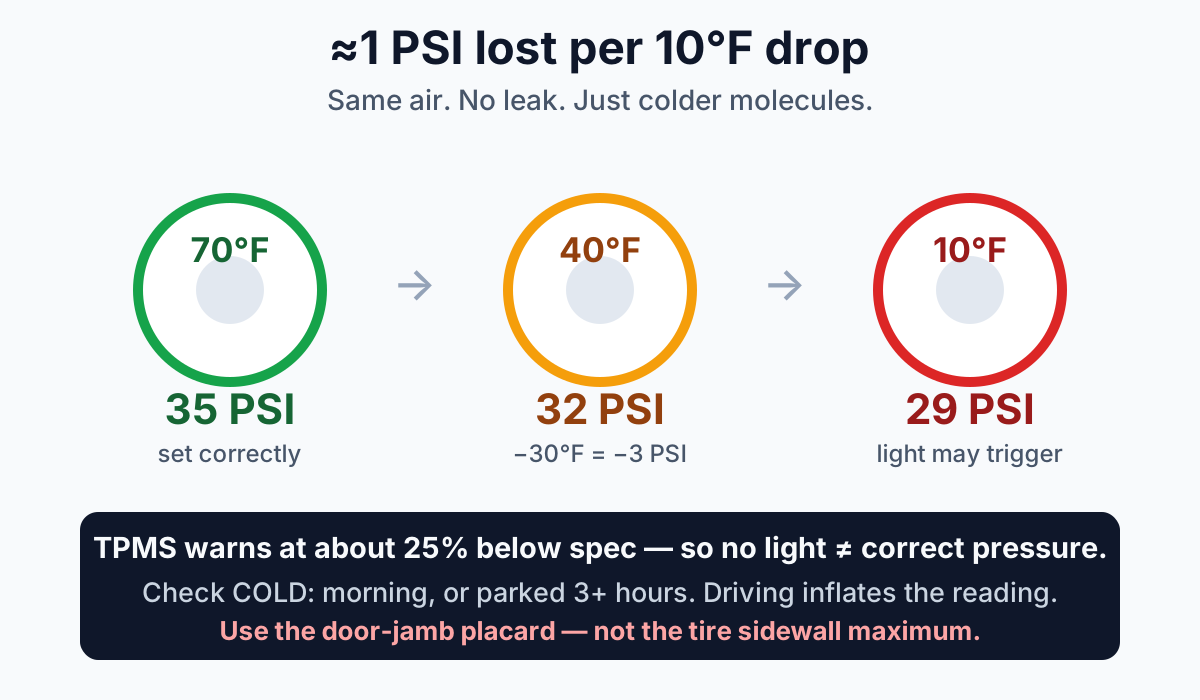
Tires lose about 1 PSI for every 10°F (roughly 2% of pressure per 10°F) that the ambient temperature falls. So a 30°F overnight drop costs about 3 PSI, enough that a tire which read correctly yesterday afternoon can set off the dashboard warning this morning, with nothing wrong and no puncture. It’s physics, not a fault. The fix is to add air back to the door-placard spec, not to overinflate in anticipation of winter.
The physics in one line
Air pressure in a sealed, fixed volume rises and falls with temperature. When air cools, its molecules move more slowly and exert less force on the tire’s inner surface, so the gauge reads lower. Nothing has escaped; the same air is simply pushing less hard.
The working rule of thumb is 1 PSI per 10°F, or about 2% of the tire’s pressure per 10°F. On a typical 35 PSI passenger tire those are nearly the same number, which is why the simpler version has stuck.
| Temperature drop | Pressure lost (from 35 PSI) | Resulting pressure |
|---|---|---|
| 10°F | ~1 PSI | ~34 PSI |
| 20°F | ~2 PSI | ~33 PSI |
| 30°F | ~3 PSI | ~32 PSI |
| 50°F | ~5 PSI | ~30 PSI |
Run your own numbers with the tire pressure temperature calculator.
Why the warning light picks winter
A Tire Pressure Monitoring System triggers its warning at roughly 25% below the vehicle’s recommended pressure. On a 35 PSI placard that’s about 26 PSI.
Now stack the effects. A tire sitting at 31 PSI in autumn, already a little low, not low enough to warn, meets a 40°F cold snap and drops to about 27 PSI. One more cold night and the light comes on. Nothing failed; a slightly soft tire simply crossed the threshold as the season turned.
Two consequences worth internalising:
- The light coming on in the first hard cold is normal. Check and inflate before assuming a puncture.
- No light does not mean correct pressure. A 25% margin is a lot. A tire can be meaningfully underinflated, costing fuel economy, tread life and wet grip, while the dashboard stays dark. That’s why monthly manual checks still matter.
What “cold tire pressure” really means
This trips up almost everyone. “Cold” refers to the tire, not the weather.
Driving flexes the tire and heats the air inside; pressure climbs as you go. Check a tire straight after a motorway run and you’ll see a reading several PSI above its resting value, inflate to the placard number then, and you’ll be underinflated once it cools.
Correct practice:
- Check first thing in the morning, or after the car has sat for at least three hours.
- If you must drive to a compressor, drive as short a distance as possible and accept the reading will be a little high, or better, inflate at home.
- Never bleed air out of hot tires to “correct” a high reading. The pressure rise is normal and the tire will be under-inflated once cool.
Don’t overinflate to pre-empt the cold
A tempting mistake: add a few extra PSI in autumn so the winter drop lands on target.
Don’t. The placard pressure is the vehicle manufacturer’s figure for that car’s weight, handling and braking. Overinflation shrinks the contact patch toward the centre of the tread, which means:
- Less grip, particularly on wet or icy roads, exactly when you need it
- Uneven wear down the middle of the tread
- A harsher ride and more impact damage from potholes
Instead, check more often through the cold months and top up to the placard figure each time.
Equally, the number moulded into the sidewall is a maximum, not a recommendation, it’s the pressure the tire is rated to hold, usually well above what your car should run. The correct figure lives on the driver’s door jamb placard (sometimes the fuel-filler flap or glovebox).
What underinflation actually costs
Beyond the warning light, running soft has real running costs. Underinflated tires flex more, which raises rolling resistance and fuel consumption, builds heat that accelerates wear, and wears the shoulders of the tread faster than the centre. Severe underinflation at speed is a genuine blowout risk because of that heat build-up.
The same physics runs in reverse in summer: a tire set correctly on a cold morning gains pressure through a hot afternoon. That’s expected and designed for, which is exactly why the specification is a cold pressure.
Frequently asked questions
Why does my tire pressure light come on in cold weather?
Because air pressure falls with temperature, about 1 PSI per 10°F. A tire that was slightly low already can cross the TPMS warning threshold (roughly 25% below the recommended pressure) after an overnight cold snap, with no leak or puncture involved.
How much pressure do tires lose in cold weather?
Roughly 1 PSI for every 10°F drop, or about 2% of the tire’s pressure per 10°F. A 30°F drop costs about 3 PSI on a typical passenger tire.
Should I inflate my tires more in winter?
No, inflate to the pressure on the door-jamb placard, measured when the tires are cold. Deliberately overinflating to offset the cold reduces your contact patch and grip on exactly the surfaces where you need it most, and wears the centre of the tread.
When should I check tire pressure?
When the tires are cold: first thing in the morning, or after the vehicle has been parked at least three hours. Driving heats the air inside and inflates the reading, so a warm check will make an underinflated tire look fine.
Where do I find the correct tire pressure?
On the placard in the driver’s door jamb (sometimes the fuel-filler flap or glovebox). Do not use the number moulded on the tire sidewall, that’s the tire’s maximum rated pressure, not your vehicle’s recommended one.
Will the TPMS light go off by itself?
Often yes, once the tires warm up on a drive or the day heats up and pressure rises back above the threshold, but that doesn’t mean the pressure is correct. Check the tires cold and inflate to spec. A light that returns repeatedly, or comes on with correct cold pressures, suggests a slow leak or a sensor fault.
Does nitrogen stop pressure changing with temperature?
No. Nitrogen follows the same gas laws as air and changes pressure with temperature in essentially the same way. Its claimed benefits relate to slower permeation through the tire and less moisture, not immunity from the temperature effect. You still need to check pressures seasonally.
Frequently asked questions
How much tire pressure do you lose in cold weather?
Tires lose roughly 1 PSI for every 10°F the ambient temperature drops, which is about 2% of total pressure per 10°F. So a 30°F overnight drop costs about 3 PSI on a typical passenger tire.
Why does my TPMS light come on in the morning when it's cold?
A Tire Pressure Monitoring System warns at roughly 25% below the placard pressure. A tire that was already slightly low can drop past that threshold overnight as the air cools, so the light comes on with no leak or puncture involved.
Should I overinflate my tires to compensate for winter cold?
No. The fix is to add air back to the door-placard specification, not to overinflate in anticipation of the cold. Overinflating reduces grip and even tread wear.
What does 'check tire pressure when cold' actually mean?
It means checking when the tires themselves are cold, not when the weather is cold. Check after the car has been parked 3+ hours or first thing in the morning, before driving heats the tires and raises the reading.
Where do I find the correct tire pressure for my car?
Use the placard on the driver's door jamb, which lists the vehicle's recommended cold pressure. Never use the number moulded on the tire sidewall, that is the tire's maximum, not the recommended setting.
How often should I check my tire pressure in winter?
Check monthly under normal conditions, and weekly during hard cold snaps or before a long trip, since large temperature swings can shift pressure by several PSI.