
explainer
How to Read a Tire Size: 225/45R17 Decoded
By Uttam Regmi · Published 2026-07-11 · Updated 2026-08-23 · 6 min read · Fact-checked, sources cited
A tire size looks cryptic but it’s just four facts in a row. Take 225/45R17: that’s a tire 225 mm wide, with a sidewall 45% of that width, of radial construction, made to fit a 17-inch wheel. Read it once and you can decode any tire on the road, and work out the one measurement that actually matters for fitment: the overall diameter.
The four parts, left to right
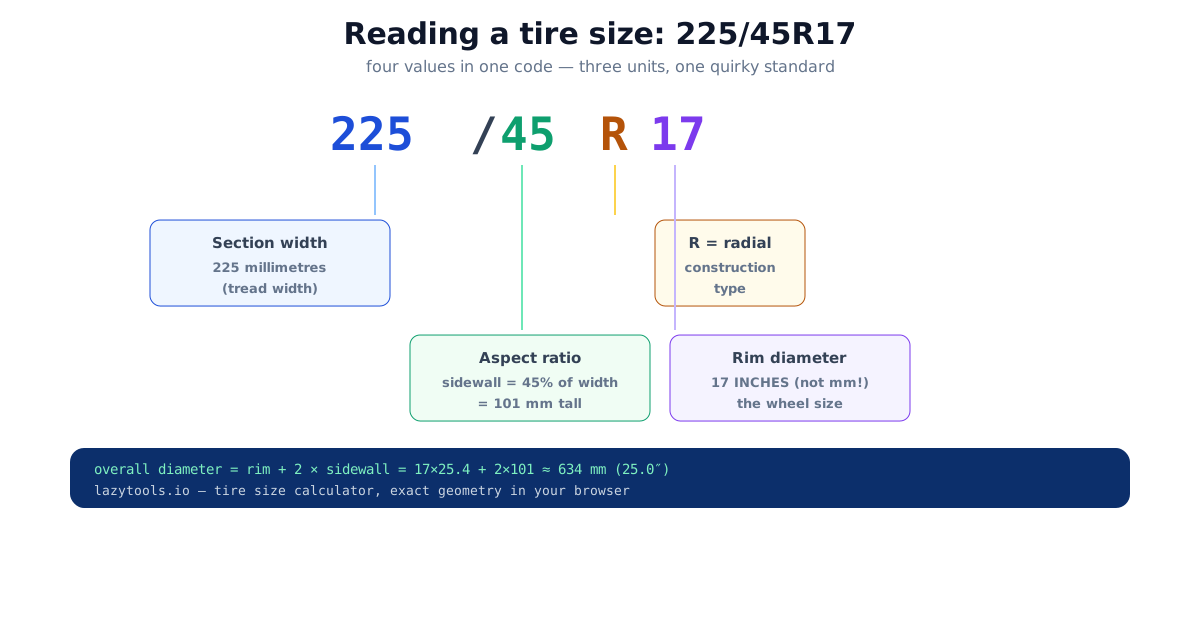
Width (225). The section width in millimetres, the tire’s width across the widest part of the tread. Bigger numbers mean a wider tire.
Aspect ratio (45). The sidewall height as a percentage of the width, not an absolute number. A 45 means the sidewall is 45% of 225 mm = 101 mm tall. This is the part people most often misread: a “45-series” tire isn’t 45 of anything fixed, change the width and the same 45 gives a different sidewall height.
Construction (R). R for radial, the standard for virtually all modern passenger tires. You’ll occasionally see ZR (associated with high speed ratings) or, on classic vehicles, D or B for bias-ply.
Rim diameter (17). The wheel diameter the tire fits, in inches. This is the metric-and-imperial mash-up that trips people up, the width and sidewall are millimetres, but the rim stays in inches. It is also the one number that has to match your wheel exactly: a 17-inch tire will not seat on an 18-inch rim, no matter how the other figures line up.
A quick sense-check helps here. Two tires can share the same rim size yet be very different tires. A 225/45R17 and a 225/50R17 both fit a 17-inch wheel and are both 225 mm wide, but the second has a taller sidewall (112.5 mm versus 101.25 mm), so it stands about 22 mm taller overall. The rim number tells you what wheel the tire bolts to; it says nothing on its own about how tall the finished tire is.
The number that isn’t written on the tire: overall diameter
The single most useful figure, for speedometer accuracy, gearing and whether a tire will fit, is the overall diameter, and it’s not printed on the sidewall. You calculate it:
Overall diameter = rim diameter + 2 × sidewall height
For 225/45R17, converting the rim to millimetres:
17 × 25.4 + 2 × (225 × 0.45) = 431.8 + 202.5 = 634.3 mm ≈ 25.0 inches
There are two sidewalls, one at the top, one at the bottom, which is why the sidewall height is doubled. From the diameter you can also get the circumference (π × diameter) and the revolutions per mile, which is what gearing and speedometer calculations actually use.
A reference table you can read at a glance
Because the aspect ratio is a percentage, sizes that look wildly different can end up nearly the same height. The table below decodes a handful of common sizes with the exact formula above, notice how the overall diameter barely moves across the first four even as the rim grows from 15 to 18 inches. That near-constant diameter is exactly what a good fitment aims for.
| Tire size | Width (mm) | Sidewall height (mm) | Overall diameter |
|---|---|---|---|
| 195/65R15 | 195 | 126.8 | 634.5 mm (25.0″) |
| 205/55R16 | 205 | 112.8 | 631.9 mm (24.9″) |
| 225/45R17 | 225 | 101.3 | 634.3 mm (25.0″) |
| 225/40R18 | 225 | 90.0 | 637.2 mm (25.1″) |
| 235/35R19 | 235 | 82.3 | 647.1 mm (25.5″) |
Read down the “sidewall height” column and you can see the trade every low-profile buyer is making: the taller wheel eats the sidewall. A 15-inch tire here carries a 127 mm cushion of rubber; the 19-inch version has barely 82 mm. Less sidewall means sharper steering response but a firmer ride and more exposure to pothole damage.
Why the overall diameter matters for fitment
Your speedometer and odometer are calibrated to the original tire’s diameter. Fit a taller tire and you travel farther per revolution, so you’re actually going faster than the speedometer shows and your odometer under-counts. A shorter tire does the reverse. The common guideline is to keep any size change within about ±3% of the original overall diameter, beyond that the errors grow and you risk clearance or gearing problems.
This is also the idea behind plus-sizing: fitting a larger-diameter wheel with a lower-profile tire while keeping the overall diameter about the same. The look changes; the rolling diameter shouldn’t.
A worked plus-sizing example
Say the car came on 205/55R16 and you want the sharper look of a 17-inch wheel. Work it in three steps:
- Find the original diameter. 16 × 25.4 + 2 × (205 × 0.55) = 406.4 + 225.5 = 631.9 mm.
- Pick a candidate on the bigger rim. Try 225/45R17: 17 × 25.4 + 2 × (225 × 0.45) = 431.8 + 202.5 = 634.3 mm.
- Check the change. (634.3 − 631.9) ÷ 631.9 = +0.38%, comfortably inside the ±3% guideline, so the speedometer error is negligible and clearance stays close to stock.
That is why 205/55R16 → 225/45R17 is such a common “plus-one” upgrade: it drops the profile and widens the tread while leaving the rolling diameter almost untouched.
The rest of the sidewall: load index and speed rating
The size code is usually followed by two more markings, for example 225/45R17 91V. The 91 is the load index (a coded maximum load per tire) and the V is the speed rating (the maximum sustained speed the tire is certified for). These are safety limits, so when you change size you should match or exceed the original figures, which are listed on the same door-jamb placard as the size.
| Speed symbol | Max speed |
|---|---|
| T | 190 km/h (118 mph) |
| H | 210 km/h (130 mph) |
| V | 240 km/h (149 mph) |
| W | 270 km/h (168 mph) |
| Y | 300 km/h (186 mph) |
A few common load-index values: 91 corresponds to about 615 kg per tire, 95 to about 690 kg, and 100 to about 800 kg. Multiply by four for a rough sense of the tire set’s rated capacity, but always defer to the vehicle placard rather than fitting to the maximum a tire can theoretically carry.
Match the placard, not the old tire
The number moulded on your current sidewall is only what happens to be fitted, a previous owner or shop may have changed it. The size the manufacturer intended lives on the placard inside the driver’s door jamb (and in the owner’s manual), along with the correct load index, speed rating and inflation pressures. When in doubt, that placard is the authority.
The tire size calculator decodes any size into its real dimensions, sidewall height, overall diameter, circumference and revolutions per mile, and the tire size comparison tool puts two sizes side by side and shows the exact speedometer error from switching. Both run entirely in your browser, with nothing uploaded.
The overall-diameter, circumference and revolutions-per-mile figures here are exact geometry from the standard tire-code formula. Always match the size on your vehicle’s door-jamb placard, and confirm clearance before changing sizes.
Frequently asked questions
What does 225/45R17 mean?
225 is the tire's section width in millimetres, 45 is the aspect ratio (the sidewall height is 45% of the width), R means radial construction, and 17 is the wheel rim diameter in inches. Together they describe a tire about 634 mm (25.0 inches) in overall diameter.
What is the aspect ratio on a tire?
The middle number, the sidewall height as a percentage of the section width. On a 225/45 tire, the sidewall is 45% of 225 mm = 101 mm tall. A lower aspect ratio means a shorter, stiffer sidewall and usually a sportier look and feel.
Why is a tire size part metric and part inches?
It's a quirk of the P-metric standard. The width and sidewall are given in millimetres, but the rim (wheel) diameter is still specified in inches, so 225/45R17 mixes both. A tire calculator converts between them so you can find the overall diameter.
How do I find a tire's overall diameter?
Overall diameter = rim diameter + 2 × sidewall height, where sidewall = width × aspect ratio. For 225/45R17: 17 × 25.4 + 2 × (225 × 0.45) = 431.8 + 202.5 = 634.3 mm, about 25.0 inches.
What does the R in a tire size mean?
R stands for radial, the construction where the internal plies run radially (across the tire). Almost all modern car tires are radial. You may also see ZR (a speed-related marking) or, rarely, D or B for older bias-ply construction.
Can I fit a different tire size on the same wheel?
Often yes, if the new tire's overall diameter stays within about ±3% of the original and it fits the rim width. Keeping the diameter close preserves speedometer accuracy, gearing and clearance, compare two sizes with a tire comparison tool before buying.
What tire size fits my car?
The recommended size is on a placard inside the driver's door jamb (and in the owner's manual), that's the size to match. The number moulded on the sidewall is what's currently fitted, which may or may not be the original spec.