
how-to
How Much Soil Do I Need for a Raised Bed?
By Uttam Regmi · Published 2026-07-28 · Updated 2026-07-28 · 7 min read · Fact-checked, sources cited
Soil for a raised bed is simply length x width x depth. Fill an 8 ft x 4 ft bed to 12 in (1 ft) deep and you need 8 x 4 x 1 = 32 cubic feet of soil, which works out to about 906 litres, or roughly 1.2 cubic yards. Every raised-bed soil calculation is that one multiplication, with the answer converted into whatever units your soil is sold in. Get the three measurements in the same system, multiply, then convert, and you’ll order the right amount the first time instead of making three trips to the garden centre.
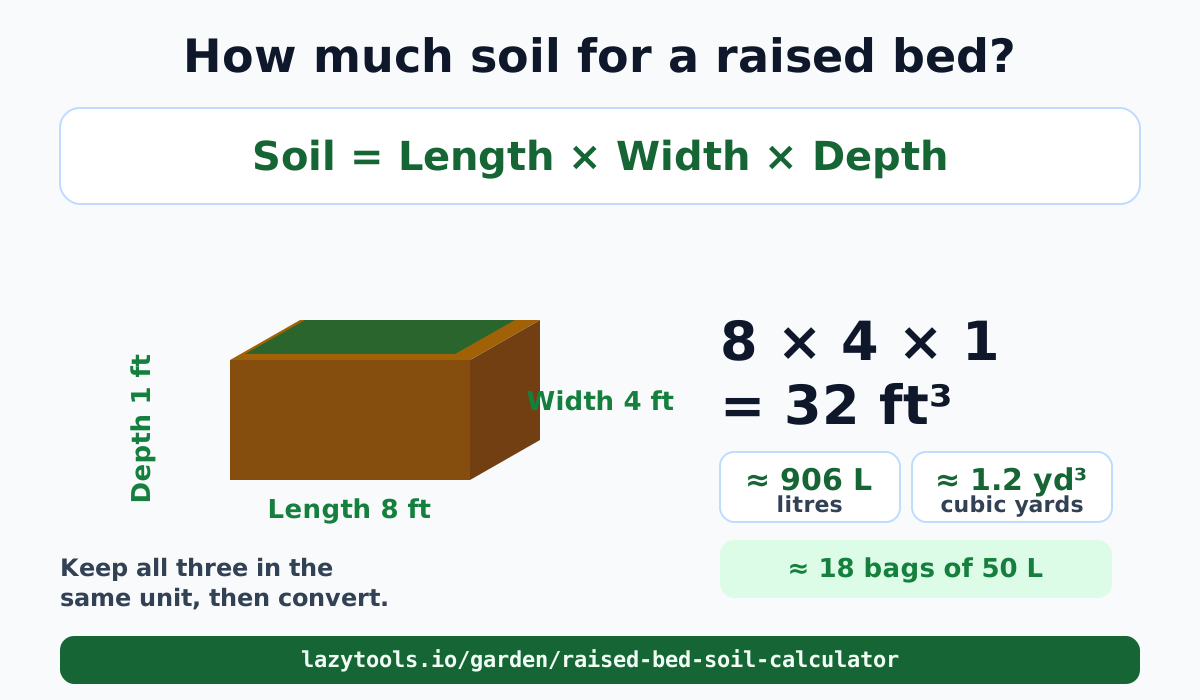
The soil volume formula
A raised bed is just a box, and the volume of a box is length x width x depth. The only rule that trips people up is keeping all three measurements in the same system before you multiply. Measure everything in feet, and your answer comes out in cubic feet. Measure everything in metres, and you get cubic metres. Mixing units, say feet for the sides and inches for the depth, is where the errors creep in.
Take the standard 8 ft x 4 ft bed and fill it a full 12 inches deep. First convert that depth to feet, since 12 in = 1 ft, so all three numbers share the same unit:
8 ft x 4 ft x 1 ft = 32 cubic feet.
Now convert to whatever’s useful. One cubic foot is about 28.317 litres, so 32 ft3 x 28.317 = about 906 litres. And because one cubic yard is 27 cubic feet, 32 / 27 = about 1.2 cubic yards. Same pile of soil, three ways of describing it, depending on whether your supplier talks in litres, cubic feet or cubic yards.
If you garden with round pots or a barrel planter instead of a rectangular bed, swap in the circle formula: volume = pi x radius squared x depth. The raised bed soil calculator handles the rectangular case for you, in metric or imperial, so you never have to juggle the conversions by hand.
How many bags of soil?
Once you know the total volume, bags are one more division: bags needed = total volume / bag size. The catch is that “bag size” varies by region. A lot of bagged soil is sold in 50-litre bags, while in the US you’ll often see 1.5 ft3 and 2 ft3 bags. Our 906-litre bed works out to about 18 bags of 50 L, or about 22 bags at 1.5 ft3, or 16 bags at 2 ft3, exactly the same soil, just packaged differently.
Here are some common bed sizes worked all the way through, using 50-litre bags for the bag count:
| Bed size (L x W x depth) | Volume | Litres | Cubic yards | Bags (50 L) |
|---|---|---|---|---|
| 4 x 4 x 0.5 ft | 8 ft3 | ~226 L | ~0.30 yd3 | ~5 bags |
| 4 x 8 x 0.5 ft | 16 ft3 | ~453 L | ~0.59 yd3 | ~10 bags |
| 4 x 8 x 1 ft | 32 ft3 | ~906 L | ~1.19 yd3 | ~18 bags |
| 8 x 4 x 1 ft | 32 ft3 | ~906 L | ~1.19 yd3 | ~18 bags |
Notice the last two rows are identical: 8 x 4 and 4 x 8 are the same bed described in a different order, so multiplication doesn’t care which side you call the length. Notice too how much the depth matters. The 4 x 8 bed needs 10 bags at 6 inches but 18 bags at 12 inches, because doubling the depth doubles the soil.
Those bag counts add up fast. At roughly 18 bags for a single deep bed, two or three beds and you’re hauling 40-plus sacks. Which leads to the money question.
Bulk vs bags: when to switch
Bagged soil is convenient for one small bed, but it’s the expensive way to buy volume. Once you need more than about one cubic metre (roughly 1.3 cubic yards), bulk soil delivered loose is usually far cheaper than the equivalent stack of bags, often dramatically so. A single 12-inch-deep 4 x 8 bed is already knocking on that door at 1.2 cubic yards. Fill two or three beds and bulk delivery almost always wins on price, and saves your back the bag-by-bag emptying.
The rule of thumb: one small shallow bed, buy bags. Anything bigger, or more than one bed, price up a bulk load first.
The best raised-bed soil mix
Volume tells you how much to buy; the mix tells you what to buy. Don’t fill a raised bed with plain bagged topsoil, it compacts and drains poorly. A widely used starting recipe splits the bed three ways:
- About one-third quality topsoil for structure and body.
- About one-third compost to supply nutrients and feed soil life.
- About one-third aeration material, perlite, coarse sand or composted bark, to keep the mix loose and free-draining.
Treat the thirds as a starting point, not gospel. Heavy feeders like a little extra compost, and a bed sitting on free-draining ground needs less added aeration than one over clay. Adjust to your plants and your local conditions. When it comes time to feed those plants through the season, the garden hub has a fertilizer calculator to work out rates.
How deep should the bed be?
Depth drives both your soil order and how well things grow. As a guide:
- 15-20 cm (6-8 in) is the practical minimum and is fine for most vegetables, leafy greens, herbs and shallow-rooted crops.
- 30 cm (12 in) or more suits root crops like carrots, parsnips and potatoes, and gives every plant a bigger moisture reservoir.
Deeper beds hold water better and need watering less often, which is why the 12-inch bed is a popular default despite needing more soil. If you’re deciding between depths, remember the trade-off is linear: going from 6 to 12 inches exactly doubles both the soil cost and the root room.
Common mistakes
A few errors account for most wrong soil orders:
- Measuring depth in the wrong unit. The sides are in feet, the depth in inches, everything gets multiplied together, and the answer is off by a factor of twelve. Convert first: get all three numbers into the same unit before multiplying.
- Forgetting soil settles. Fresh mix compacts noticeably after the first few waterings. Fill a little proud, slightly over the rim, so the bed doesn’t end up looking sunken.
- Buying bags when bulk is cheaper. Past about a cubic metre, stacking up 50-litre bags costs far more than a loose delivery. Price the bulk option before you fill a trolley.
- Filling too shallow for root crops. Carrots and parsnips in a 15 cm bed come out stubby and forked. If you want good roots, commit to the depth up front.
Order the right amount, once
Every raised-bed soil question comes back to one multiplication: length x width x depth, in matching units, converted to whatever your soil is sold in. Do it before you shop and you’ll buy the right volume, choose bags or bulk sensibly, and fill the bed to a healthy depth in one go. Plug your bed’s dimensions into the raised bed soil calculator to get cubic feet, litres, cubic yards and an estimated bag count in one step, worked out privately in your browser, and then get planting with the seed starting guide.
Volume figures are computed directly from length x width x depth using 1 ft3 = 28.317 L and 1 yd3 = 27 ft3; bag counts assume 50-litre bags and are rounded up. Soil-mix ratios and depth guidance are general recommendations, adjust them to your plants, climate and local soil.
Frequently asked questions
How much soil do I need for a raised bed?
Multiply length by width by depth in the same unit. An 8 ft x 4 ft bed filled 12 in (1 ft) deep is 8 x 4 x 1 = 32 cubic feet, which is about 906 litres or roughly 1.2 cubic yards. Keep all three measurements in the same system, then convert the answer to whatever your soil is sold in.
How many bags of soil fill a raised bed?
Divide the bed's total volume by the bag size. A 906-litre (32 ft3) bed needs about 18 bags of 50-litre soil. If your soil is sold in US cubic-foot bags, that's about 22 bags of 1.5 ft3 or 16 bags of 2 ft3. Once you need more than about a cubic metre, bulk delivery is usually far cheaper than bags.
What is the best soil mix for a raised bed?
A common, reliable recipe is roughly one-third quality topsoil, one-third compost for nutrients, and one-third aeration material such as perlite, coarse sand or composted bark. Adjust the balance to your plants and your local soil rather than treating it as an exact rule.
How deep should a raised bed be?
At least 15-20 cm (6-8 in) works for most vegetables. Aim for 30 cm (12 in) or more for root crops like carrots and to reduce how often you need to water, since deeper beds hold moisture better.
How much soil for a 4x8 raised bed?
A 4 ft x 8 ft bed filled 12 in deep is 32 cubic feet, about 906 litres or 1.2 cubic yards. Filled only 6 in deep it's 16 cubic feet, about 453 litres. Depth changes the total in direct proportion, so halving the depth halves the soil.
Should I fill a raised bed right to the top?
Fill it a little proud, slightly over the rim, because fresh soil and compost settle over the first few weeks of watering. Filling exactly level usually leaves the bed looking sunken once everything compacts.