
explainer
When to Start Seeds: Timing Your Whole Garden to the Last Frost
By Uttam Regmi · Published 2026-07-12 · Updated 2026-08-23 · 5 min read · Fact-checked, sources cited
Every vegetable-planting decision hangs on one date: your average last spring frost. Start too early and tender seedlings get killed by a late cold snap or grow leggy waiting to go out. Start too late and slow crops like tomatoes never ripen. Get the frost date right and everything else is just counting weeks forward or backward from it.
Why the last frost date runs everything
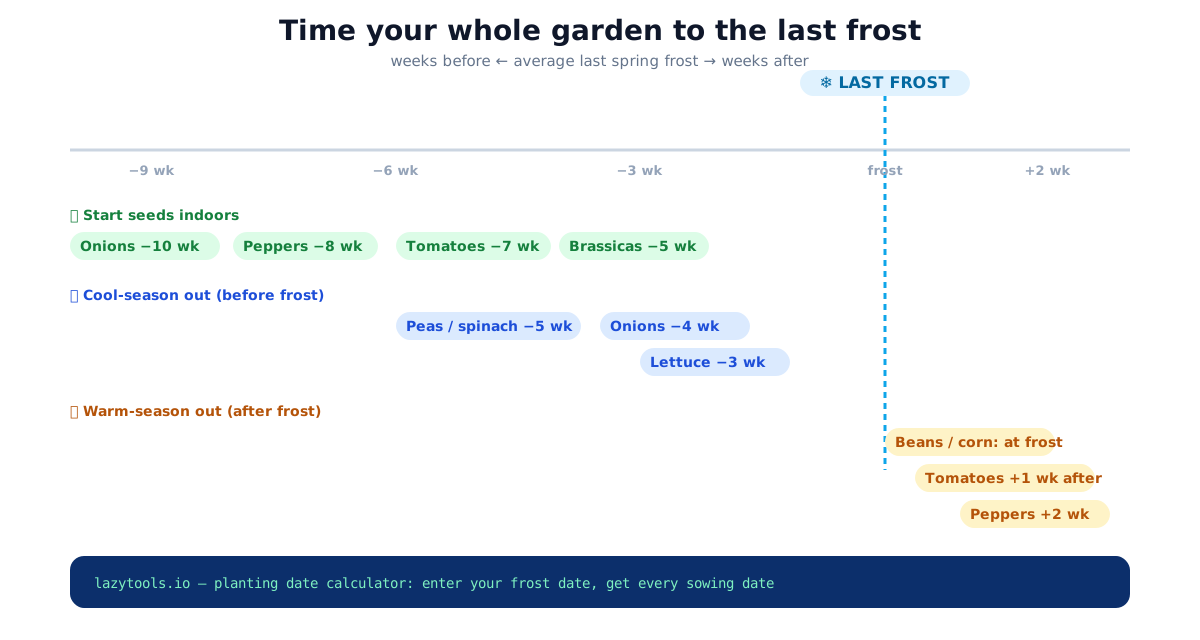
Plants split neatly into two camps. Cool-season crops (peas, lettuce, spinach, the cabbage family) tolerate light frost and actually prefer cool weather. They can go outside weeks before the last frost. Warm-season crops (tomatoes, peppers, beans, squash, corn) are killed or stunted by cold, so they wait until after it. Because that one date sorts everything, seed packets and planting guides express timing as “weeks before/after last frost” rather than fixed calendar dates, the same offset works whether you garden in a warm or cold region.
Counting backward: when to start seeds indoors
Starting indoors gives slow crops a head start so they mature before autumn. Count back from the last frost:
| Crop | Start indoors | Move outdoors |
|---|---|---|
| Onions (from seed) | ~10 weeks before | ~4 weeks before frost |
| Peppers, eggplant | ~8 weeks before | ~2 weeks after frost |
| Tomatoes | ~6-8 weeks before | ~1 week after frost |
| Broccoli, cabbage, kale | ~5-6 weeks before | ~2-4 weeks before frost |
| Lettuce | ~4-5 weeks before | ~3 weeks before frost |
| Cucumber, squash | ~3-4 weeks before | ~1-2 weeks after frost |
Don’t start too early: a tomato seedling started 12 weeks out becomes a root-bound, leggy plant stuck on a windowsill waiting for the weather. Matching the start date to the transplant date keeps plants stocky and healthy.
A worked example
Suppose your average last spring frost is 1 May. Working the offsets from the table gives a concrete sowing calendar with no guesswork:
| Task | Offset | Date (last frost = 1 May) |
|---|---|---|
| Start onions indoors | ~10 weeks before | late February |
| Start peppers indoors | ~8 weeks before | early March |
| Start tomatoes indoors | ~7 weeks before | mid-March |
| Sow peas & spinach outdoors | ~5 weeks before | late March |
| Start brassicas indoors | ~5 weeks before | late March |
| Direct-sow beans, corn, squash | at/after frost | early May |
| Transplant tomatoes outdoors | ~1 week after | second week of May |
| Transplant peppers outdoors | ~2 weeks after | mid-May |
Shift the frost date and every row shifts with it, that is the whole point of frost-relative timing. A gardener whose last frost falls on 15 April simply slides the same calendar two weeks earlier; one at 20 May slides it later. The offsets stay put.
Counting forward: sowing outdoors
Many crops skip the indoor stage entirely. Cool-season direct sowing happens before the frost, peas and spinach about 4-6 weeks before, lettuce a few weeks before. Warm-season direct sowing waits until after it, beans, corn, squash and cucumbers at or just after the last frost, when the soil has warmed. Root crops (carrots, beets) and legumes (peas, beans) are almost always direct-sown because they resent having their roots disturbed by transplanting.
For warm-season direct sowing, soil temperature matters more than the calendar. Beans and squash germinate slowly and may rot in cold, wet ground even after the frost date has passed; corn is similar. If spring is running cold, waiting an extra week for the soil to warm usually beats sowing on the nominal date. A cheap soil thermometer removes the guesswork, most warm-season seeds want soil above roughly 16 °C (60 °F) to germinate reliably.
Hardening off before transplanting
Indoor-raised seedlings have never met wind, direct sun or cool nights, and moving them straight outdoors can shock or scorch them. Hardening off bridges that gap: over about 7-10 days, set the seedlings outside for a lengthening spell each day, starting with an hour or two in shade and building up to a full day and eventually an overnight, before they go into the ground. Skipping this step is one of the most common reasons healthy-looking seedlings stall or bleach after transplanting. Build the hardening-off window into your plan so the seedlings are ready exactly when their transplant date arrives, not a week after.
Warm-season crops: read the nights, not just the frost date
The last frost date marks when a killing frost becomes unlikely, but tender crops care about cold nights too, not only actual frost. Tomatoes, peppers and cucumbers stall when nights sit in single digits Celsius even without frost, so the “~1-2 weeks after frost” offsets in the table build in a buffer for exactly that. In a cold spring, wait for settled warm nights rather than rushing plants out on the calendar date; a plant held back a week catches up fast, while one chilled early may sulk for a month.
Turn the offsets into real dates
The one thing you have to supply is your local average last-frost date, look it up from a regional extension service or a frost-date tool for your area. Once you have it, the planting date calculator turns each crop’s offset into an actual calendar date to start seeds, transplant and direct-sow. From there, the plant spacing and seed spacing calculators tell you how many plants and seeds you’ll need for your beds, all worked out privately in your browser.
These are general guidelines that vary with region, cultivar and the season’s weather, and extension sources differ by a week or two on some crops. Anchor to your local last-frost average and the seed packet, and give tender crops a safety margin in a cold spring. Timing figures adapted from extension-service planting schedules.
Frequently asked questions
When should I start my seeds indoors?
It depends on the crop and counts back from your average last spring frost: tomatoes about 6-8 weeks before, peppers about 8 weeks, and brassicas (broccoli, cabbage, kale) about 5-6 weeks before. Enter your frost date in a planting-date calculator to get the exact dates.
What is a last frost date?
The average date of the last frost of spring in your area, the single most important date for vegetable planting. Cool-season crops go out before it; tender warm-season crops go out only after it, once frost danger has passed.
Which vegetables can I plant before the last frost?
Cool-season, frost-tolerant crops: peas, spinach, lettuce, kale, broccoli, cabbage and onions can be sown or transplanted several weeks before the last frost. Warm-season crops (tomatoes, peppers, beans, squash, corn) must wait until after it.
When can I plant tomatoes outside?
About 1-2 weeks after your last frost date, once nights stay above roughly 10 °C (50 °F) and the soil has warmed. Tomatoes are cold-sensitive, planting during a cold snap stunts them even without an actual frost.
How many weeks before the last frost do I start seeds?
Roughly: onions 8-10 weeks, peppers and eggplant 8, tomatoes 6-8, brassicas 5-6, and lettuce 4-5. Fast growers like squash and cucumber need only 3-4 weeks (or can be sown straight outside after frost).
Where do I find my last frost date?
From your national or regional extension/meteorological service, or a frost-date lookup that uses your postcode or nearest weather station. It's an average, so add a safety margin for tender crops in a cold year.
Do I have to start everything indoors?
No. Root crops (carrots, beets), peas, beans, corn and squash are usually direct-sown outdoors because they dislike transplanting. Starting indoors is mainly for slow-to-mature warm-season crops like tomatoes and peppers, to get a head start.