
how-to
Is Refinancing Worth It? How to Find Your Mortgage Break-Even Point
By Uttam Regmi · Published 2026-08-23 · Updated 2026-08-23 · 4 min read · Fact-checked, sources cited
Refinancing is worth it once you stay in the loan past the break-even point, the month when your accumulated monthly savings finally equal the closing costs. The formula is simple: break-even months = closing costs ÷ monthly savings. If a refinance lowers your payment by $250 a month and costs $4,500 to close, you break even in 4,500 ÷ 250 = 18 months, keep the loan longer than that and you come out ahead, sell or refinance again sooner and it cost you money. The one trap to watch: a lower monthly payment can come from a longer term, which quietly increases the total interest you pay.
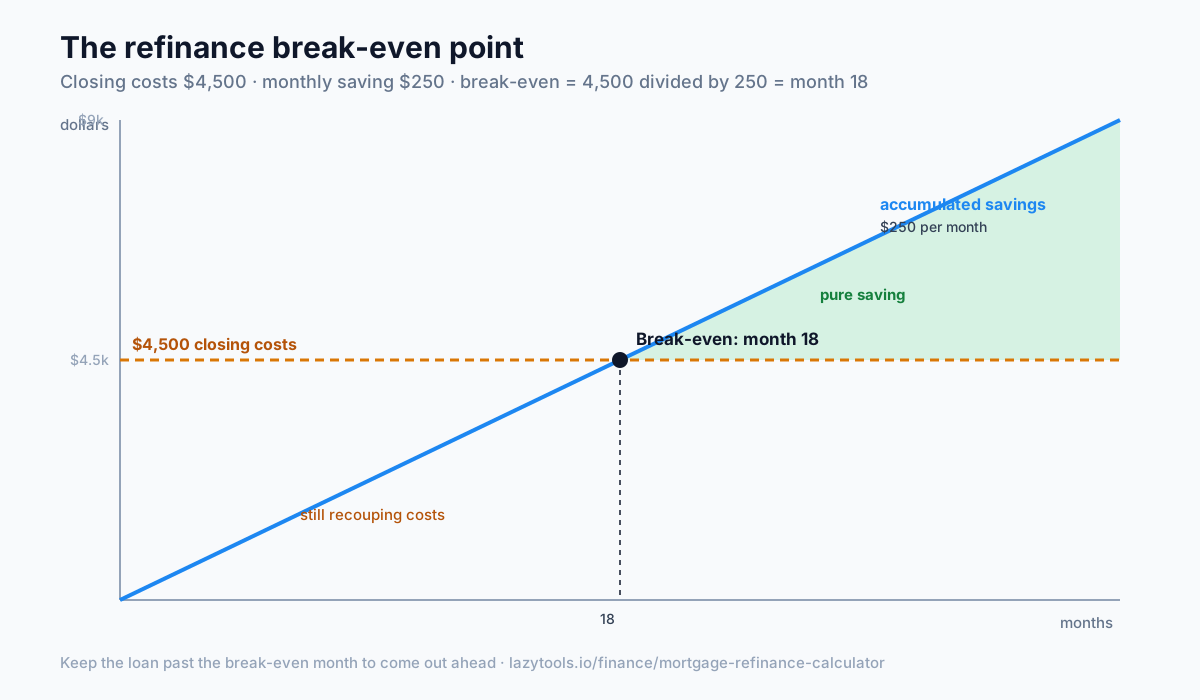
The one number that matters: break-even
Every refinance has an up-front cost (closing costs) and an ongoing benefit (a lower monthly payment). The break-even point is where the benefit has paid back the cost:
break-even months = closing costs ÷ monthly savings
Say your current payment is $2,024 and the new one is $1,703, a $321 monthly saving, with $4,500 in closing costs:
4,500 ÷ 321 ≈ 14 months
After 14 months you have recouped the cost; from month 15 onward the $321 is pure saving. If you expect to keep the home and loan well past that, refinancing is an easy yes. If you might sell in a year, it is an easy no. The mortgage refinance calculator shows this break-even month the instant you enter your numbers.
Where the monthly saving comes from
Both the old and new payments are amortization payments, the fixed monthly amount that pays a loan to zero over its term:
M = P · i ÷ (1 − (1 + i)⁻ⁿ)
where P is the balance, i the monthly rate (annual rate ÷ 12) and n the number of months. Lowering the rate lowers M; the monthly saving is simply the old payment minus the new one. A worked example on a $300,000 balance:
| Rate | Term | Monthly payment | |
|---|---|---|---|
| Current loan | 6.8% | 27 years left | $2,024 |
| Refinanced | 5.5% | 30 years | $1,703 |
| Saving | −1.3% | +3 years | $321 / month |
The trap: a lower payment that costs more
Notice the refinance above also reset the term to 30 years. Part of that $321 lower payment is the rate cut, but part is just spreading the balance over more years. Stretch a loan long enough and the monthly payment drops even if the rate barely moves, while the total interest paid goes up.
That is why you should always check the lifetime cost, not only the monthly saving: add up every remaining payment on the current loan, and compare it to every payment on the new loan plus the closing costs. If the new total is lower, you genuinely save; if it is higher, you have simply traded a smaller payment now for more interest later. The calculator reports this lifetime difference next to the monthly saving so the trade-off is visible.
A quick decision checklist
- Will you keep the loan past the break-even month? If yes, and the lifetime cost is lower, refinance.
- Is the term the same or shorter? A same-term refinance at a lower rate is the cleanest win.
- Are the closing costs realistic? Use your actual lender estimate (often 2-5% of the loan), not a round guess.
- Rolling costs into the loan? Fine for cash flow, but it raises the balance, the break-even math still decides.
Run your own figures, balance, current rate, years left, new rate, term and closing costs, in the Mortgage Refinance Calculator to see your monthly saving, break-even month and lifetime difference at once. Everything stays in your browser; no financial details are uploaded. This is educational information, not financial advice.
Frequently asked questions
How do I calculate the refinance break-even point?
Break-even months = closing costs ÷ monthly savings. If refinancing lowers your payment by $250 a month and costs $4,500 to close, you break even in 4,500 ÷ 250 = 18 months. Stay in the loan longer than that and refinancing saves you money.
When is refinancing a mortgage worth it?
When you can lower your rate meaningfully and expect to keep the home past the break-even point. If you might sell or move before you recoup the closing costs, the refinance costs you money even though the monthly payment is lower.
Does a lower monthly payment always mean saving money?
No. Extending the term, for example refinancing 25 years left into a fresh 30-year loan, lowers the monthly payment but can increase the total interest you pay over the life of the loan. Always compare the lifetime cost, not just the monthly figure.
What are typical mortgage refinance closing costs?
Refinance closing costs are commonly around 2-5% of the loan amount, covering application, appraisal, title, origination and other lender fees. On a $300,000 loan that is roughly $6,000–$15,000. Enter your actual total for an accurate break-even.
Should I roll closing costs into the loan?
You can, which avoids paying cash up front, but it increases the balance you finance and the interest you pay on it. Either way, the break-even and lifetime-cost comparison is what tells you whether the refinance is worthwhile.
How much lower does the rate need to be to refinance?
There is no fixed threshold. It depends on your balance, closing costs and how long you will keep the loan. Rather than a rule of thumb, calculate the actual monthly saving and the break-even month for your numbers.