
explainer
How Deep Should a Paver Base Be? Gravel, Sand and the Mistakes That Sink Patios
By Uttam Regmi · Published 2026-07-18 · Updated 2026-07-18 · 4 min read · Fact-checked, sources cited
A paver patio or walkway needs 4-6 inches of compacted gravel with 1 inch of bedding sand on top. A driveway needs 8-12 inches of gravel, because vehicle loads roughly double the requirement. Almost every failed paver job, sinking, rutting, spreading edges, traces back to one of three things: not enough base, base compacted all at once instead of in thin lifts, or too much sand used to hide an uneven base.
How deep, by what it carries
| Use | Compacted gravel base | Bedding sand |
|---|---|---|
| Walkway / path | 4″ | 1″ |
| Patio | 4-6″ | 1″ |
| Driveway (cars) | 8″ | 1″ |
| Driveway (heavy vehicles) | 10-12″ | 1″ |
Go deeper in two situations: poor-draining clay subgrade, and cold climates with hard frost, where a deeper free-draining base reduces frost heave. If your soil stays wet and soft, adding base depth is cheaper than rebuilding.
Work out quantities with the paver calculator and the gravel calculator.
Total excavation depth
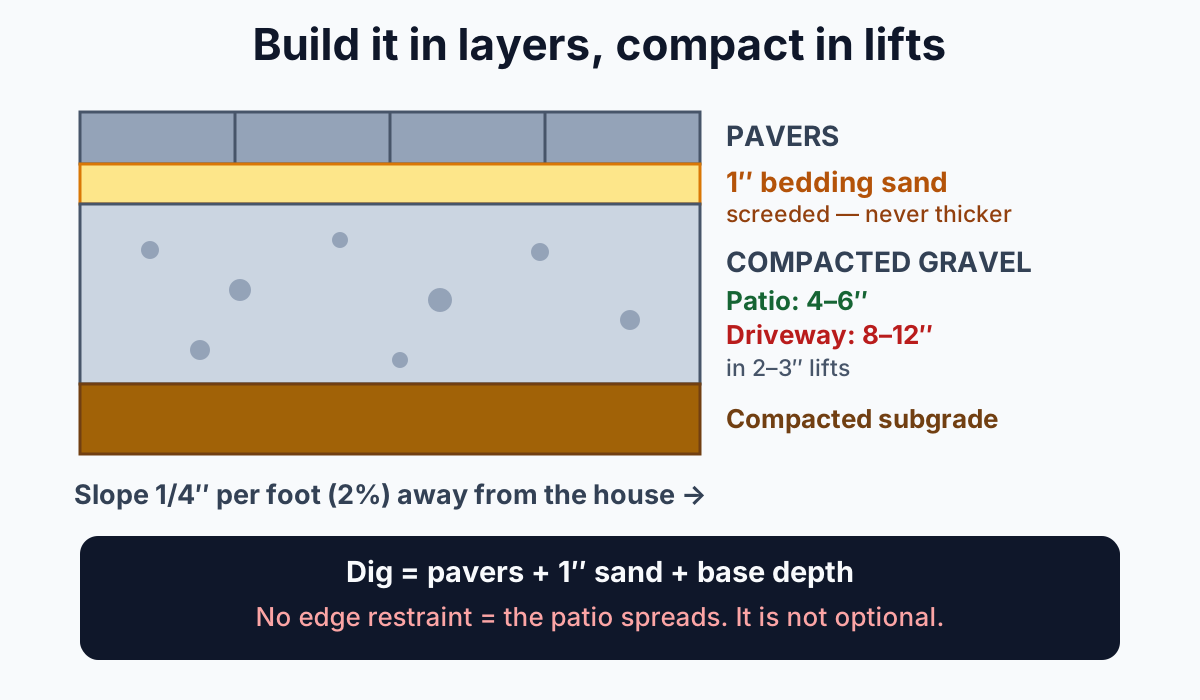
Dig depth = paver thickness + 1″ sand + base depth.
A typical patio with 2⅜″ pavers over a 6″ base needs about 9½ inches of excavation. Add a little for the string line and get the depth right before you start, deepening a partly built patio is miserable work.
Remember that excavated soil swells 20-30% once loose, so the pile is bigger than the hole. The excavation calculator accounts for that when you’re sizing a skip or trailer.
Compact in lifts. This is the step people skip
A plate compactor only densifies material a few inches down. Dump 6 inches of gravel and run the compactor over it and you’ll get a firm crust over loose stone, which consolidates unevenly under load, months later, as dips in your finished patio.
Correct method:
- Compact the subgrade first, before any gravel goes in.
- Add gravel in 2-3 inch lifts.
- Compact each lift before adding the next. Multiple passes in different directions.
- Lightly dampening the gravel helps it compact. It should be moist, not muddy.
Use a well-graded crushed aggregate (a mix of stone sizes down to fines, often sold as road base, crusher run or MOT Type 1). The fines lock the larger stone together. Uniform, single-size clean gravel does not compact into a rigid base. It stays loose.
Why the sand layer must stay at 1 inch
The bedding layer is for setting pavers to a consistent level, nothing more. Its thickness is deliberately small because sand doesn’t compact into a stable structure. It shifts under load.
The classic DIY mistake is using extra sand to smooth out a base that wasn’t levelled properly. It looks fine on day one, then the thick spots consolidate at a different rate from the thin ones and the surface goes wavy within a season.
Screed the sand to a uniform 1 inch using pipe rails, don’t compact it before laying, and set pavers directly onto it. The pavers are compacted into the sand at the end, which locks everything together.
Use coarse, sharp concrete sand, not fine play sand or builder’s sand, which holds water and shifts.
Slope: build it into the base
Water must run off, and away from the house. The standard is 1/4 inch per foot, a 2% fall. Over a 12-foot patio, that’s a 3-inch drop across its width.
Crucially, build the slope into the excavation and the base, so the gravel and sand layers stay uniform in thickness. Trying to create fall by varying the sand depth reintroduces the thick-sand problem above.
Edge restraint: the omission that spreads a patio
Pavers rely on interlock. Without something holding the perimeter, the outer course pushes outward under traffic, joints open, sand escapes, and the field creeps, usually starting within a year or two.
Install plastic or metal edge restraint spiked into the compacted base (not into the sand), or a concrete haunch, around every unsupported edge. It’s a small line item with an outsized effect on how long the job lasts.
The finishing step
After laying, sweep joint sand across the surface and run the plate compactor over the pavers (with a protective mat) to vibrate sand into the joints and seat the pavers into the bedding layer. Repeat the sweep-and-compact cycle until the joints stay full. Polymeric sand hardens slightly when wetted and resists washout and weeds better than plain sand, follow its instructions closely, since it must be properly cleaned off the paver faces before wetting.
Frequently asked questions
How deep should a paver base be?
For patios and walkways, use 4-6 inches of compacted gravel plus 1 inch of bedding sand. Driveways need 8-12 inches of gravel because vehicle loads roughly double the requirement. Go deeper on clay or poor-draining soil and in hard-frost climates.
How thick should the bedding sand layer be under pavers?
One inch, screeded uniformly. Sand is a levelling layer, not a base, so it must never be thicker. Thick sand is the most common cause of a wavy patio, because deep and shallow areas consolidate at different rates.
Why should gravel be compacted in thin lifts?
A plate compactor only densifies material a few inches down. If you dump a full 6 inches and compact once, you get a firm crust over loose stone that settles unevenly under load. Adding gravel in 2-3 inch lifts and compacting each one produces a uniformly dense base.
What kind of gravel is best for a paver base?
A well-graded crushed aggregate containing a range of sizes down to fines, sold as road base, crusher run, or MOT Type 1. The fines lock the larger stone together when compacted. Uniform single-size clean gravel with no fines will not form a rigid base.
Do I need edge restraint around pavers?
Yes. Without it the outer pavers gradually push outward under traffic, joints open, bedding sand escapes, and the field spreads. Spike plastic or metal edge restraint into the compacted base rather than into the sand.
How much slope does a paver patio need?
About 1/4 inch per foot, a 2% fall, running away from the house. Build the slope into the excavation and base layers so the gravel and sand stay uniform in thickness, rather than creating fall by varying the sand depth.