
how-to
Rice to Water Ratio: Perfect Rice by Type
By Uttam Regmi · Published 2026-07-28 · Updated 2026-07-28 · 5 min read · Fact-checked, sources cited
White long-grain rice uses a 2:1 water-to-rice ratio, 2 cups of water for every 1 cup of rice. That’s the number to remember for everyday rice. But it isn’t one-size-fits-all: brown rice wants more water, basmati and jasmine want less, and sushi and wild rice sit at their own points. Get the rice to water ratio right for the type in your bag and you’ll get fluffy, separate grains instead of a gluey or crunchy pot. Here’s every ratio, plus how to use them.
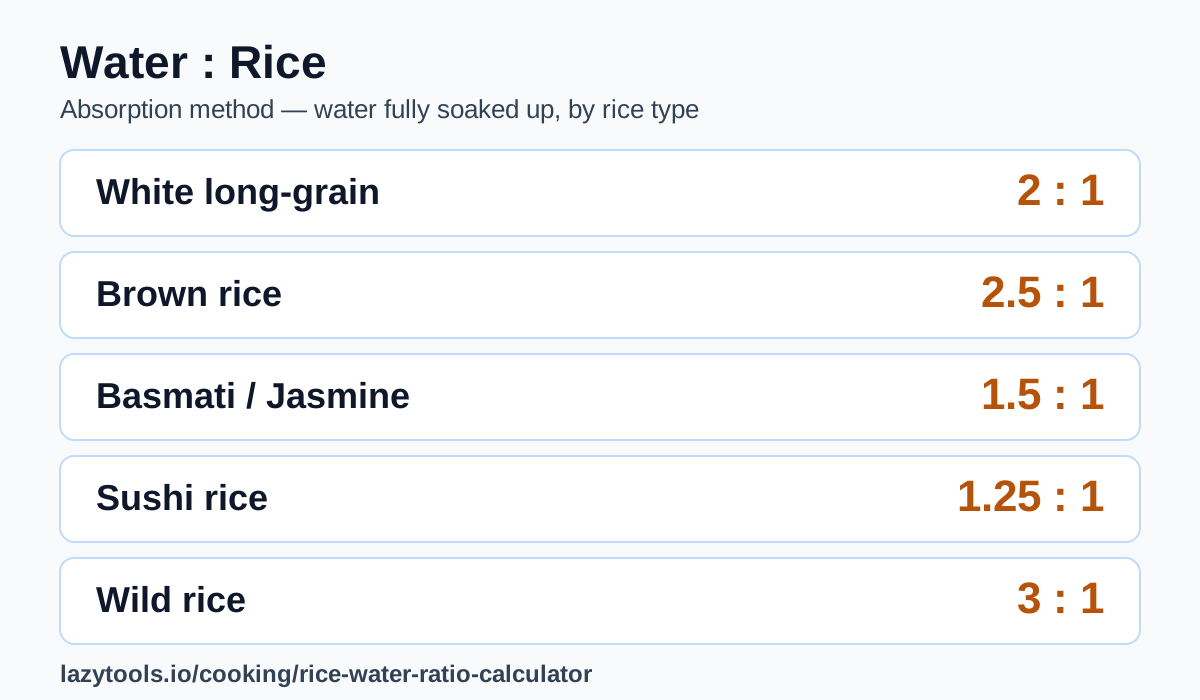
Rice to water ratio by type
These are the standard ratios for the absorption method, where the rice soaks up all the water rather than boiling in an excess you drain off. Water is written first, so “2:1” means two parts water to one part rice.
| Rice type | Water : rice | Notes |
|---|---|---|
| White long-grain | 2 : 1 | The everyday default; ~15 min simmer |
| Brown rice | 2.5 : 1 | Bran layer resists water; ~45 min simmer |
| Basmati | 1.5 : 1 | Long aromatic grains stay separate; short simmer |
| Jasmine | 1.5 : 1 | Soft, fragrant Thai rice; short simmer |
| Sushi rice | 1.25 : 1 | Short-grain, meant to be sticky; short simmer |
| Wild rice | 3 : 1 | Not true rice; chewy, needs the most water and time |
Because these are ratios rather than fixed amounts, they scale to any batch size and work in any unit, cups, millilitres, or a rice-cooker cup. Absorption also varies a little with your pan, lid and heat, so treat each ratio as a strong starting point and adjust once you know your kitchen. The Rice to Water Ratio Calculator does the arithmetic for whatever amount you’re cooking.
How much water for 1 cup of rice
Multiply your rice amount by the water side of the ratio. A few worked examples:
- 1 cup white long-grain rice → 2 cups water (2:1).
- 1 cup basmati or jasmine → 1.5 cups water (1.5:1).
- 2 cups brown rice → 5 cups water (2.5:1, so 2 × 2.5).
- 1 cup sushi rice → 1.25 cups water (1.25:1).
- 1 cup wild rice → 3 cups water (3:1).
The unit only has to be consistent within the recipe. If you measure rice in millilitres, measure water in millilitres too: 200 mL of white rice needs 400 mL of water. Whatever cup or scoop you use for the rice, use the same one for the water.
How much cooked rice you get
Rice expands dramatically as it absorbs water and its starch swells, roughly tripling in volume. As a rule of thumb, 1 cup of dry rice becomes about 3 cups cooked, and brown and wild rice puff up a touch more.
For portioning, plan about ½ to ¾ cup of cooked rice per person as a side dish, or more if rice is the centre of the plate. So one cup of dry rice, about three cups cooked, comfortably serves four as a side. That triple-in-volume rule is also why you never want a pan crammed full of dry rice: it needs room to grow. For exact amounts at any headcount, the calculator works backward from servings too.
The absorption method, step by step
The ratios above assume this method, which is how most stovetop and rice-cooker rice is made.
- Rinse the rice under cold water until the water runs clear, swirling and draining a few times. This washes off surface starch for fluffier, less sticky grains. Drain it well so you don’t carry extra water into the pot, the exception is sushi rice, where a little stickiness is wanted.
- Measure water by the ratio for your rice type and add it to the pan.
- Bring it to a boil, uncovered, over medium-high heat.
- Cover, drop to low, and simmer without lifting the lid or stirring. White rice takes around 15 minutes; brown rice needs about 45 minutes because its bran resists water (soaking it first shortens this).
- Rest off the heat, still covered, for 5-10 minutes. This lets the moisture redistribute so the bottom isn’t wet and the top isn’t dry.
- Fluff with a fork to separate the grains, and serve.
For measuring your rice and water precisely, especially if a recipe mixes cups and grams, the grams-to-cups guide covers kitchen conversions.
Common mistakes
- Lifting the lid or stirring while it simmers. Both release steam and disturb the grains, giving you unevenly cooked, gummy rice. Trust the timer and leave it be.
- Skipping the rest. Fluffing the instant the heat goes off gives you a wet bottom and dry top. The 5-10 minute rest fixes that.
- Not draining after rinsing. Rinsing is good, but water clinging to wet rice adds to the pot and throws off the ratio. Drain thoroughly.
- Using white-rice water for brown rice. Brown rice needs the higher 2.5:1 ratio and a longer simmer; give it a white-rice amount and it comes out crunchy.
- Applying these ratios to boil-and-drain cooking. If you cook rice like pasta in a big pot of water you pour off, the water amount doesn’t matter. These ratios only apply to the absorption method, where the water is meant to be fully soaked up.
Get your exact amounts
Remember the defaults, 2:1 for white, 2.5:1 for brown, 1.5:1 for basmati and jasmine, and you’ll rarely need to look anything up. For odd batch sizes, unit conversions, or working backward from the number of servings, the Rice to Water Ratio Calculator runs entirely in your browser: pick the rice, enter the amount, and it gives you the water. Nothing is uploaded, and it’s free to use. Explore more kitchen tools at the Cooking hub.
Frequently asked questions
What is the water to rice ratio?
For white long-grain rice cooked by absorption, it's 2:1, two parts water to one part rice. Other types differ: brown rice is 2.5:1, basmati and jasmine are 1.5:1, sushi rice is 1.25:1, and wild rice is 3:1. Because it's a ratio, the water comes out in the same unit as the rice, whether you measure in cups or millilitres.
How much water for 1 cup of rice?
For 1 cup of white long-grain rice, use 2 cups of water. For 1 cup of brown rice use 2.5 cups; for basmati or jasmine use 1.5 cups; for sushi rice use 1.25 cups; and for wild rice use 3 cups. These are absorption-method amounts, where all the water is soaked up rather than boiled off and drained.
Why is the brown rice ratio higher?
Brown rice keeps its bran layer, the tough outer coating that white rice has milled away. That bran resists water, so brown rice needs more liquid (about 2.5:1) and a longer simmer of roughly 45 minutes to cook through. Soaking it first can shorten the cooking time.
How much does rice expand when cooked?
Rice roughly triples in volume. One cup of dry rice yields about 3 cups cooked, a little more for brown and wild rice. For planning, allow about half to three-quarters of a cup of cooked rice per person as a side dish.
Does rinsing rice change the water amount?
Rinsing washes off surface starch for fluffier, less sticky grains, but you should drain it well afterward so you don't add extra water and throw off the ratio. Sushi rice is the exception, some clinginess is wanted there, so it's handled differently.
Do these ratios work for boil-and-drain cooking?
No. These are absorption-method ratios, where the measured water is fully absorbed by the rice. If you boil rice in a large pot of water and drain it like pasta, the exact water amount doesn't matter, so the ratios don't apply.