
explainer
How Much Do I Need? Estimating Paint, Tile, Concrete and Mulch
By Uttam Regmi · Published 2026-07-11 · Updated 2026-08-23 · 6 min read · Fact-checked, sources cited

Every “how much do I need?” question is really one of two calculations. If you’re covering a surface , paint, tiles, wallpaper, it’s an area job. If you’re filling a depth, concrete, mulch, soil, it’s a volume job. Get that straight and the rest is arithmetic (plus a sensible bit of waste).
Area jobs vs volume jobs
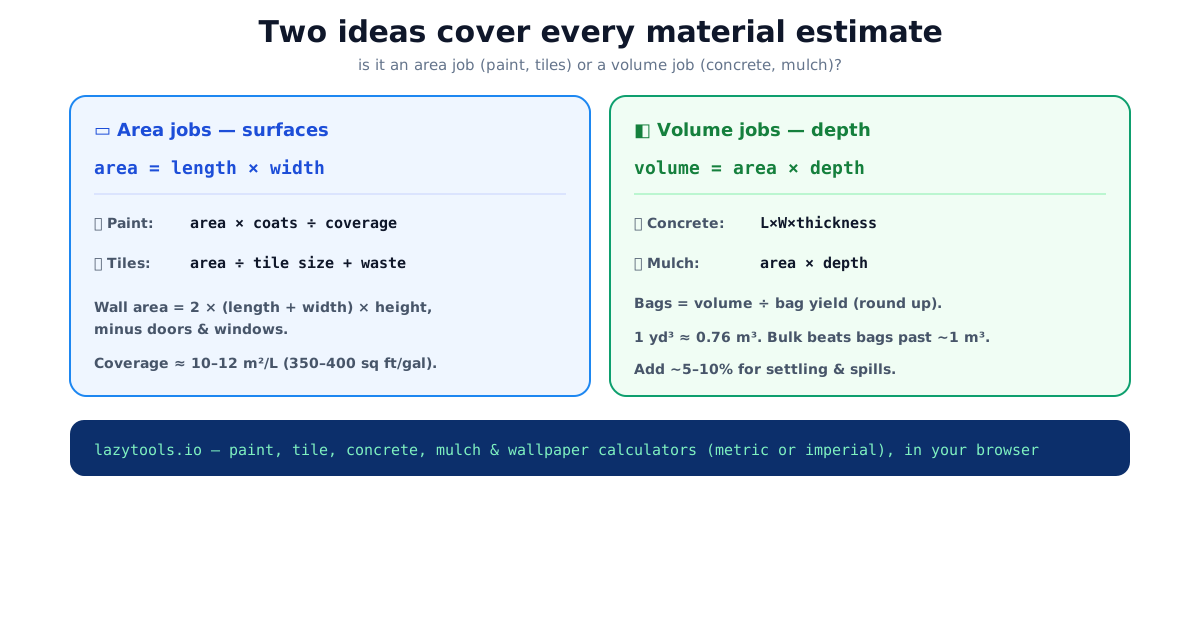
The distinction sounds trivial, but it’s where most over- and under-buying starts. Buy paint by the square metre when the job is really a volume (say, filling a planter with soil) and you’ll be wildly out. So before any arithmetic, ask a single question: am I covering a surface, or filling a space? Surfaces , walls, floors, splashbacks, are two-dimensional and priced by area. Spaces, slabs, beds, trenches, post holes, are three-dimensional and priced by volume. Everything downstream is the same three steps: measure, apply the right formula, then convert the raw number into the units the shop actually sells.
Quick reference
The messy part is rarely the geometry, it’s converting a raw area or volume into cans, boxes and bags. Coverage and yield vary by product, so always check the label, but these typical figures are enough to plan and budget:
| Material | Job type | Formula | Typical coverage / yield | Waste to add |
|---|---|---|---|---|
| Paint | Area | area × coats ÷ coverage | ≈ 10-12 m²/L (350-400 sq ft/gal) per coat | Round to whole cans + touch-up |
| Tiles / flooring | Area | area ÷ tile size | 1 tile = its own footprint | 10% straight, 15-20% diagonal/herringbone |
| Wallpaper | Area | wall area ÷ usable roll area | Standard roll ≈ 5 m² usable | 10-15% for pattern repeat |
| Concrete | Volume | L × W × thickness | 20 kg pre-mix bag ≈ 0.01 m³ | 5-10% settling/spills |
| Mulch / soil | Volume | area × depth | Sold by m³, yd³ or by the bag | Round up (compaction) |
A handy conversion to memorise: 1 cubic yard ≈ 0.76 m³, and 1 m³ ≈ 1.31 cubic yards, useful because bulk landscaping materials are often quoted in yards even where everything else is metric.
Paint (area)
Paint covers walls, so start with wall area: 2 × (length + width) × height. Subtract the doors and
windows (a standard door is ~1.8-2 m²), multiply by the number of coats (two is standard), and divide
by the coverage printed on the tin:
paint = (wall area − openings) × coats ÷ coverage
A 4 × 3 m room, 2.4 m high, two coats at 11 m²/L, needs about 5.4 litres. The paint calculator does the subtraction and rounding for you, porous or bare walls drink more, so use the lower coverage figure.
Tiles and flooring (area)
Divide the floor (or wall) area by the area of one tile, then add waste for cuts and breakages:
tiles = area ÷ tile area, then + 10% (straight) to 20% (diagonal/herringbone)
For 12 m² with 30 × 30 cm tiles: 12 ÷ 0.09 = 134 tiles, plus 10% ≈ 148. The tile calculator also converts that to boxes. Buy everything from one batch, tile shade varies between production runs.
Concrete (volume)
Concrete fills a shape, so it’s length × width × thickness:
volume = L × W × thickness
A 3 × 2 m slab, 100 mm thick, is 0.6 m³. Divide by a bag’s yield (a 20 kg pre-mix bag makes about 0.01 m³) to get the bag count, around 65 with a little spare. Past roughly a cubic metre, ready-mix delivery is cheaper and easier than mixing dozens of bags. The concrete calculator adds ~7% for settling and spills, because running short mid-pour creates a weak joint.
Mulch and soil (volume)
Mulch and topsoil are spread to a depth, so it’s area × depth:
volume = area × depth
A 10 m² bed at 7.5 cm deep is 0.75 m³ (about a cubic yard). Keep mulch 5-8 cm (2-3 in) deep to suppress weeds without smothering plants. The mulch & soil calculator shows cubic metres, cubic yards and bags, and past about a cubic metre, bulk delivery wins on price.
Worked example: a small garden makeover
Real projects mix area and volume jobs, so it helps to run one end to end. Say you’re refreshing a 3 × 4 m courtyard: a concrete slab, a tiled feature strip, a fresh coat on the boundary wall, and a mulched border.
- Slab, a 3 × 4 m base at 100 mm deep is
3 × 4 × 0.1 = 1.2 m³. That’s past the ~1 m³ point where bags stop making sense, so this is a ready-mix delivery job, not a stack of pre-mix bags. - Tiled strip, a 4 × 0.5 m band is 2 m². With 30 × 30 cm tiles (0.09 m² each) that’s
2 ÷ 0.09 = 23 tiles, plus 10% ≈ 26 tiles. - Wall paint, one 4 m wall, 2 m high, is 8 m². Two coats at 11 m²/L is
8 × 2 ÷ 11 ≈ 1.5 L, buy a 2.5 L tin and keep the rest for touch-ups. - Mulch border, a 6 m² border at 7.5 cm deep is
6 × 0.075 = 0.45 m³. Under a cubic metre, so bags or a small bulk bag both work.
Notice how each line uses one of just two formulas. The only project-specific judgement is the waste margin and the bag-versus-bulk cut-off.
Common estimating mistakes
- Mixing units mid-calculation. Measuring width in metres but thickness in millimetres gives an answer 1,000× wrong. Convert everything to one unit first, metres and cubic metres, or feet and cubic feet.
- Forgetting the second coat. Paint coverage on the tin is per coat. Two coats doubles the paint; bare plaster or a strong colour change can need three.
- Ignoring the pattern repeat. Patterned wallpaper and diagonal tiling waste more offcuts than plain layouts, bump the waste allowance, not just the base area.
- Rounding down. Always round up to whole cans, boxes and bags. Running short means a second trip, a possible batch mismatch, or a cold joint in a concrete pour.
- Not subtracting large openings. For paint, deduct doors and picture windows; for flooring, deduct a kitchen island’s footprint. Small openings you can leave in as built-in waste allowance.
The golden rule: add a little
Every one of these should be rounded up with a margin:
- Paint, whole cans, plus a touch-up tin.
- Tiles, 10% waste minimum, more for patterns and cuts; keep spares for repairs.
- Concrete, 5-10% for settling and uneven ground.
- Mulch/soil, round up; it compacts.
And buy from the same batch where colour matters (paint, tiles, wallpaper), so a future repair blends in.
Quick summary
Ask “area or volume?” first. Area jobs use area = length × width, paint is area × coats ÷ coverage, tiles are area ÷ tile size + waste. Volume jobs use volume = area × depth, concrete and mulch divide by a bag yield for the bag count. Add 5-10% waste, round up to whole units, and buy from one batch. Run the numbers with the Home & DIY calculators.
Sources: standard building and decorating material-estimation practice; typical paint coverage and pre-mix bag yields (check product labels for exact figures). Educational estimates, not a substitute for a professional take-off on structural work.
Frequently asked questions
How do I estimate how much paint I need?
Work out the wall area, 2 × (length + width) × height, subtract doors and windows, multiply by the number of coats, and divide by the paint's coverage (about 10-12 m² per litre, or 350-400 sq ft per gallon). A 4 × 3 m room, 2.4 m high, two coats, works out to roughly 5-6 litres.
How do I estimate tiles or flooring?
Divide the area to cover by the area of one tile, then add a waste allowance, about 10% for a straight layout, 15-20% for diagonal or herringbone patterns. Divide by the tiles-per-box to get boxes, rounding up.
How do I estimate concrete?
Concrete is a volume: length × width × thickness. A 3 × 2 m slab, 0.1 m thick, is 0.6 m³. Divide by the yield of a pre-mix bag (a 20 kg bag makes about 0.01 m³) to get bags, for large volumes, ready-mix delivery is cheaper.
How do I estimate mulch or soil?
Mulch is also a volume: bed area × depth. For 10 m² at 7.5 cm deep, that's 0.75 m³ (about 1 cubic yard). Bulk delivery is much cheaper than bags once you need more than about a cubic metre.
How much waste should I add?
Roughly 10% for tiles (more for complex patterns), 5-10% for concrete (settling and spills), and buy paint in whole cans with a little spare. Keeping leftovers from the same batch avoids colour or shade mismatches in future repairs.
Should I work in metric or imperial?
Whichever your materials are sold in, the calculators toggle between metres/litres and feet/gallons. Just keep every dimension in the same unit within one calculation.