
explainer
Hat Sizes Decoded: Why 7⅛ Means Your Head's Diameter (Charts + Measuring Guide)
By Uttam Regmi · Published 2026-07-05 · Updated 2026-08-23 · 6 min read · Fact-checked, sources cited
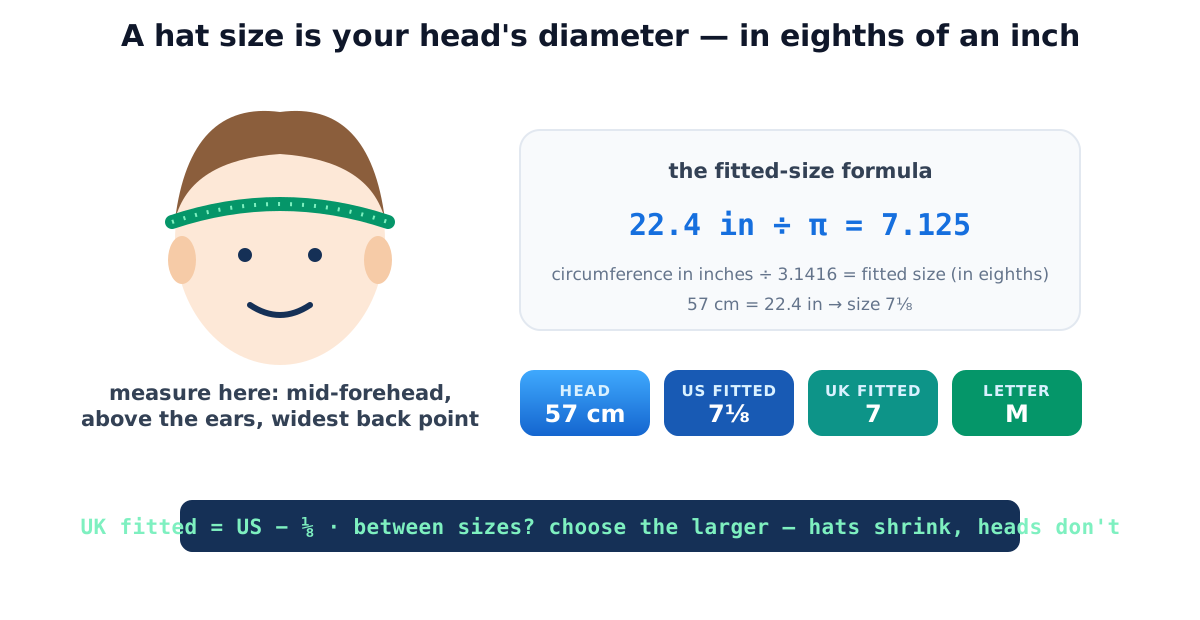
A fitted hat size is just your head’s circumference in inches divided by π, your head’s diameter, quoted in eighths of an inch. A 57 cm head is 22.4 inches around; 22.4 ÷ 3.1416 = 7⅛, a medium. Measure once, and the hat size converter reads out US, UK and letter sizes instantly.
The fedora-era logic behind the eighths
Hat sizing predates flexible tape measures being standard shop kit. Hatmakers measured the wooden head-forms (“blocks”) hats were shaped on by their diameter, and a block for a 22-inch head has a diameter of 22 ÷ π ≈ 7 inches. The eighth-inch steps survive from an era when a gentleman’s hat was fitted like a suit. So the strange-looking 7⅜ on a modern baseball cap is a 19th-century wood-block measurement: it means “your head is about 7⅜ inches across.”
📌 Citable fact A fitted hat size equals head circumference in inches divided by π: a 57 cm (22.4 in) head takes US size 7⅛. UK fitted sizes run exactly ⅛ below US for the same head, and letter sizes map roughly as S = 54-55 cm, M = 56-57, L = 58-59, XL = 60-61.
Measure your head in 30 seconds
- Take a soft measuring tape (or string, then a ruler against it).
- Wrap it where a hat actually sits: across the mid-forehead, just above the ears, around the widest point at the back of the skull.
- Comfortably snug. You should slip one finger under the tape. Hair worn under the hat stays under the tape.
- Read centimeters or inches into the converter.
The chart
| Head (cm) | Head (in) | US fitted | UK fitted | Letter |
|---|---|---|---|---|
| 53 | 20.9 | 6⅝ | 6½ | XS/S |
| 55 | 21.7 | 6⅞ | 6¾ | S |
| 56 | 22.0 | 7 | 6⅞ | M |
| 57 | 22.4 | 7⅛ | 7 | M |
| 58 | 22.8 | 7¼ | 7⅛ | L |
| 59 | 23.2 | 7⅜ | 7¼ | L |
| 60 | 23.6 | 7½ | 7⅜ | XL |
| 62 | 24.4 | 7¾ | 7⅝ | XXL |
Full 52-64 cm table on the converter page. Adult heads average ~56-57 cm, which is why “M” is every shop’s first sell-out.
Three worked examples
Reading the formula off a real measurement makes it stick. In each case the only arithmetic is “inches ÷ π,” and the eighth-inch step is whatever fraction lands nearest.
- Alex measures 54.5 cm. That’s 54.5 ÷ 2.54 = 21.5 in, and 21.5 ÷ π = 6.83, nearest eighth 6⅞, letter band S. Sitting near the top of the S band, a stretch-fit S/M cap works but runs snug; a true fitted 6⅞ is cleaner.
- Priya measures 57 cm. 57 ÷ 2.54 = 22.4 in, ÷ π = 7.14 → 7⅛, a solid M. This is the single most common adult result, which is exactly why medium sells out first.
- Marcus measures 60.5 cm. 60.5 ÷ 2.54 = 23.8 in, ÷ π = 7.58. That rounds up to 7⅝ and an XL, and since he’s between 7½ and 7⅝, the size-up rule says take the 7⅝.
Notice that a 6 cm spread of real heads (54.5 → 60.5) only moves the fitted number by about ¾ of an inch. Hat sizes change slowly, which is why an eighth-inch resolution is enough to fit almost everyone.
Fitted vs adjustable vs stretch
Not every hat uses the eighths scale. How closely the chart matters depends on the closure:
| Construction | Examples | How it’s sized | Does the chart matter? |
|---|---|---|---|
| Fitted | Dress hats, New Era 59FIFTY | Exact eighths (6⅞–8) | Yes, measure and match |
| Adjustable | Snapbacks, dad caps, strapbacks | One size, wide range | Only at the extremes |
| Stretch-fit | S/M, L/XL flexfit | Two elastic bands | Yes, pick your band |
| Elastic / knit | Beanies, one-size | Stretches to fit | Rarely |
- Fitted caps and dress hats hold their shape, so the eighth-inch number is the whole game.
- Adjustable snapbacks and dad caps span roughly a small-to-large range on one shell; only very small or very large heads run out of adjustment.
- Stretch-fit flexfit caps use two elastic bands (commonly S/M and L/XL). If your measurement lands at the top edge of a band, take the larger band, elastic that’s stretched to its limit loosens fast.
Material note: wool felt and leather sweatbands shrink modestly with sweat and rain, the classic reason hatters say size up and pad with sizing tape rather than buy tight.
Growing heads, kids, and re-checking your size
A child’s head grows quickly, so kids’ hat sizes are usually given straight in centimeters (or as age bands) rather than eighth-inch fitted numbers, a fitted size bought a season ahead won’t stay right for long. For a growing child, measure fresh each time and lean toward adjustable closures.
Adult heads are stable but not fixed. Your effective hat size can drift by close to a centimeter from things that have nothing to do with your skull: a heavier or lighter hairstyle, a fresh haircut, or even a hat’s own liner packing down over years of wear. If a hat that once fit now sits loose or tight, re-measure before assuming the hat changed, often it’s the hair, or the sweatband that has softened. When you land exactly between two eighths, the same rule applies as everywhere else in hat sizing: take the larger number and snug it with a strip of sizing foam if needed.
Common hat-size mistakes
- Measuring across the forehead only, the tape must round the widest back point or it reads small.
- Confusing US and UK fitted, same-looking numbers, ⅛ apart; a UK 7 hat fits a US 7⅛ head.
- Trusting letters across brands, one maker’s L is another’s XL; centimeters settle it.
- Buying tight “to break in”, felt shrinks further; headache guaranteed.
- Ignoring hair changes, thick hairstyles or a big cut change effective size by ~1 cm.
Quick summary
Measure around your head where a hat sits, then divide the inches by π, that’s your fitted size (57 cm = 22.4” = 7⅛ = M). UK sizes run ⅛ below US, letter sizes vary by maker, and between sizes you always go up. The hat size converter turns any measurement into every system instantly.
Related: ring · clothing · shoe size converters, and cm to inches for the raw tape math.
Frequently asked questions
How do I measure my head for a hat?
Wrap a soft tape around the head where a hat sits, mid-forehead, above the ears, around the widest back point, comfortably snug (one finger under the tape). Typical adult heads run 54-58 cm / 21¼–22¾ inches.
What does a hat size like 7¼ mean?
Head circumference in inches divided by π, effectively your head's diameter, quoted in eighths of an inch. 7¼ ≈ 22.8 in ≈ 58 cm around.
What hat size is a medium?
Commonly 56-57 cm (US fitted 7-7⅛). Typical letter bands: S 54-55, M 56-57, L 58-59, XL 60-61 cm, but they shift slightly by maker, which is why fitted numbers exist.
Are US and UK hat sizes the same?
Off by exactly ⅛: UK fitted = US fitted − ⅛ for the same head (US 7⅛ = UK 7). Continental Europe skips the arithmetic and sizes hats by centimeters directly.
What size is a New Era 59FIFTY 7 3/8?
7⅜ fitted ≈ 23.2 in ≈ 59 cm head circumference, an L in most letter systems. Baseball fitted caps use the classic US eighths scale.
Should I size up or down between hat sizes?
Up. Wool and leather sweatbands shrink slightly with moisture and wear, and a slightly loose hat can be tightened with sizing tape; a tight one gives headaches.