
explainer
The Pomodoro Technique: Why 25-Minute Sprints Beat Marathon Focus
By Uttam Regmi · Published 2026-07-06 · Updated 2026-07-06 · 7 min read · Fact-checked, sources cited
The Pomodoro Technique breaks work into 25-minute focus sprints, a “pomodoro”, each followed by a 5-minute break, with a longer break after four, and its power isn’t the number 25 but the ritual: committing to one task for one bounded block makes starting easy and burnout hard. Run it with the Pomodoro timer, which counts the sprints and even shows the countdown in your browser tab.
Where it came from
The technique was devised by Francesco Cirillo as a university student in the late 1980s, using a kitchen timer shaped like a tomato, pomodoro in Italian. Overwhelmed by studying, he challenged himself to focus for just ten minutes. The timer turned an intimidating, open-ended task into a small, concrete commitment, and the method grew from there. That origin story is the whole idea in miniature: the timer makes focus a game you can win.
The method, precisely
- Pick one task. Not a list, one thing.
- Set the timer for 25 minutes and work only on that task until it rings.
- Take a 5-minute break. Step away; rest your attention.
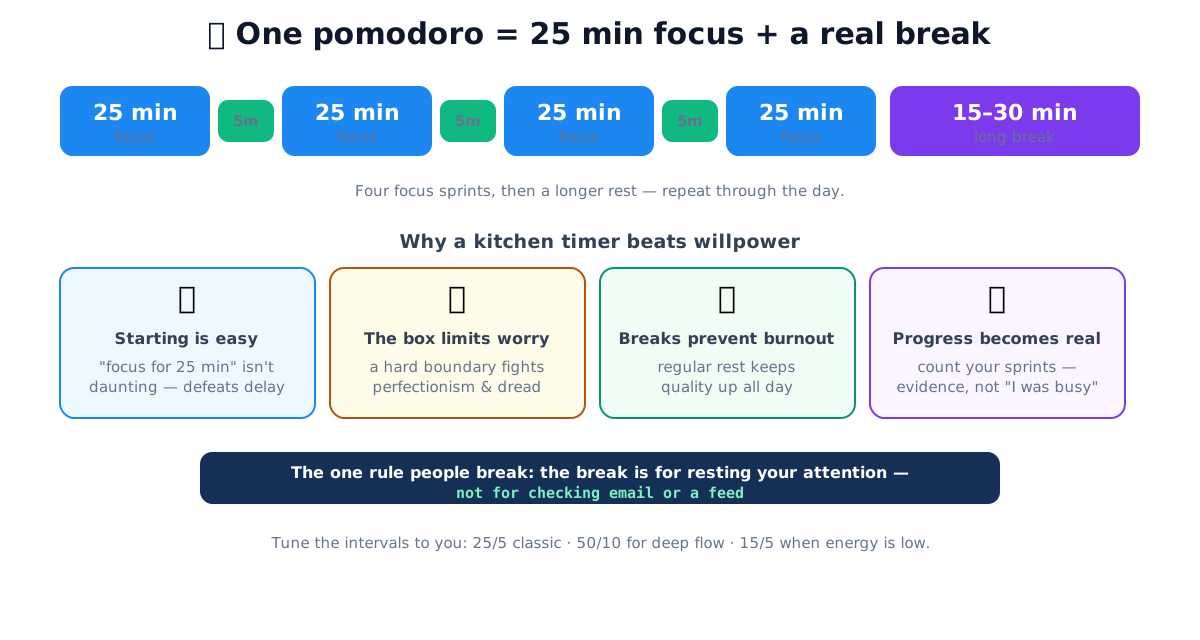
- Repeat. After four pomodoros, take a longer break of 15-30 minutes.
That’s it. The timer runs the whole cycle, chimes at each transition, counts your completed sprints for the day, and auto-starts the next phase so you don’t have to think about the mechanics.
Why the timer works when willpower doesn’t
Three quiet mechanisms do the work:
- It makes starting easy. Procrastination is usually about beginning, not doing. “Work on the report” is daunting; “focus on the report for 25 minutes” is not. You’re not promising to finish, only to start one pomodoro, which is the hardest part anyway.
- The boundary fights perfectionism and anxiety. An open-ended work session invites the dread of “this could take forever.” A 25-minute box says: for now, all you owe is 25 minutes of attention. That defuses the pressure that fuels avoidance.
- The breaks prevent burnout. Sustained focus degrades; brief, regular rest keeps quality up across a day. The break isn’t slacking, it’s what makes the next sprint sharp.
And a bonus: at day’s end you have a count of pomodoros, turning a vague “I was busy” into concrete evidence of focused work, which is both motivating and a genuinely useful estimate of how long things take.
Running it well: the details that matter
Protect the break. The single most common mistake is spending the 5 minutes on email or a social feed. That’s not a break, it’s a new focus tunnel, and it robs your brain of the reset. Stand up, move, look far away (pair it with the 20-20-20 eye rule for your eyes). Come back genuinely refreshed.
Handle interruptions deliberately. Cirillo distinguishes two kinds. An internal distraction, a stray thought, “I should check X”, gets written on a quick list and dismissed; you stay on task. An external one, a colleague, a call. You try to defer (“give me ten minutes”). If you truly must break, the pomodoro is void: don’t count a fragmented block; start a fresh one after.
One task per pomodoro. If a task is huge, a pomodoro is a slice of it; if tiny tasks abound, batch several into one pomodoro. The unit is the 25 minutes, not the task.
A worked example: one focused morning
Abstract rules click into place once you see a real cycle. Say you sit down at 9:00 with a report to write, a few emails to answer, and a slide to fix:
| Time | Block | What you do |
|---|---|---|
| 9:00-9:25 | Pomodoro 1 | Draft the report’s outline and first section, nothing else |
| 9:25-9:30 | Short break | Stand, stretch, refill water; no screens |
| 9:30-9:55 | Pomodoro 2 | Keep drafting; a “check Slack” urge gets jotted on a note, not acted on |
| 9:55-10:00 | Short break | Look out the window, rest your eyes |
| 10:00-10:25 | Pomodoro 3 | Batch the small tasks, the three emails and the slide fix |
| 10:25-10:30 | Short break | Walk to another room and back |
| 10:30-10:55 | Pomodoro 4 | Polish and finish the report |
| 10:55-11:20 | Long break | Real rest, a proper coffee, a walk, a chat |
By 11:20 you have four completed pomodoros logged and a finished report. Notice two things: the Slack urge in Pomodoro 2 was parked as an internal distraction rather than obeyed, and the fiddly small jobs were batched into a single block instead of scattered across the morning. That is the technique working as designed, not four random hours, but four countable, protected units of attention.
Tuning it to you
The classic 25/5 is a default, not a law. Match the rhythm to your attention and the work:
| Situation | Try |
|---|---|
| Standard focused work | 25 / 5 (classic) |
| Deep work you fall into easily | 50 / 10, fewer context switches |
| Low energy, or a task you dread | 15 / 5, a lower bar to start |
| Detailed, error-prone work | shorter sprints, fatigue shows as mistakes |
The timer lets you set any focus length, break lengths, and how many sprints trigger the long break, so you can find your rhythm and keep it.
How Pomodoro compares to other focus methods
Pomodoro is one of several ways to structure a working day, and they solve slightly different problems. It helps to see where it sits:
| Method | Core unit | Best for | Weak spot |
|---|---|---|---|
| Pomodoro | 25-min focus + 5-min break | Beating procrastination and pacing a day | The bell can interrupt genuine flow |
| Time blocking | Named blocks on a calendar | Deciding what to do and when | Says nothing about within-block focus |
| Flowtime | Focus until you naturally stop, then rest | Deep, immersive work | Little structure; easy to skip breaks |
| 52/17 | 52-min focus + 17-min break | People who like longer runs at a task | Long blocks can still invite fatigue |
The key insight: these are not rivals. Time blocking chooses the work; Pomodoro (or Flowtime) governs how you execute inside a block. A common pairing is to lay out the day with the time-blocking planner, then run each block as one or two pomodoros. The 52/17 pattern is simply a longer Pomodoro variant, the same rhythm of protected focus and real rest, tuned for people who dislike frequent interruptions.
When Pomodoro isn’t the right tool
It’s not universal. Work that depends on long unbroken flow, deep coding, writing, design where the 25-minute bell is an unwelcome interruption, often suits longer intervals or no timer at all. And Pomodoro governs how you focus, not what on: decide the priorities first with the Eisenhower matrix or a time-blocked day, then use pomodoros to execute.
Common Pomodoro mistakes
- Skipping breaks to “keep the momentum”. This is exactly how the technique collapses into burnout; the breaks are load-bearing.
- Spending breaks on screens, a feed or inbox is a new focus tunnel, not rest.
- Counting interrupted pomodoros, a fragmented block isn’t a pomodoro; start fresh.
- Rigidly forcing 25 minutes on work that wants long flow, tune the interval instead.
- Using it to decide what to do, Pomodoro executes priorities; it doesn’t set them.
Quick summary
The Pomodoro Technique turns focus into a simple, winnable ritual: 25 minutes on one task, a real 5-minute break, four rounds, then a longer rest. It works by making starting easy, boxing in perfectionism, and building in recovery, and it hands you a daily count of focused sprints as a bonus. Protect the breaks, handle interruptions deliberately, and tune the intervals to your attention. Run the whole cycle with the Pomodoro timer, free, private, and entirely in your browser.
Related tools: Eisenhower matrix to choose what to focus on · time-blocking planner · eye rest timer. Part of the privacy-first productivity toolkit.
Frequently asked questions
What is the Pomodoro Technique?
A time-management method: work in focused intervals, classically 25 minutes, each followed by a 5-minute break, with a longer 15-30 minute break after four intervals. Each interval is a 'pomodoro', named after the tomato-shaped kitchen timer its creator, Francesco Cirillo, used as a student in the late 1980s.
Why does 25 minutes work?
The exact number matters less than the commitment: 25 minutes is short enough that starting doesn't feel daunting (defeating procrastination) but long enough to get into a task. The hard boundary also fights perfectionism and open-ended anxiety, you're not committing to 'finish', just to focus for one pomodoro.
What do I do during the break?
Genuinely rest your attention, stand up, stretch, look out a window, get water. Avoid anything that pulls you into a new focus tunnel (email, social feeds, messages), because that defeats the point of resting. The break is for the brain to reset, not to switch to another screen.
Should I always use exactly 25 and 5 minutes?
No, treat them as a starting point. Some people focus better in 50/10 blocks; others prefer shorter 15-minute sprints when energy is low. Tune the intervals to your attention span and the task, but keep the core rhythm of focused work followed by a real break.
What happens if I get interrupted?
Cirillo's advice: for an internal distraction (a stray thought), jot it on a list and return to the task. For an external one, try to defer it politely; if you must break, the pomodoro is void, start a fresh one afterward rather than counting a fragmented block.
Does the Pomodoro Technique actually work?
For many people, yes. It externalises focus into a simple ritual, makes starting easier, builds in recovery to prevent burnout, and turns a vague day into countable units of progress. It suits tasks you can break into focus blocks; it's less suited to work requiring long unbroken flow, where longer intervals fit better.