
explainer
What Time Should I Go to Bed? Sleep Cycles, Bedtime Charts, and Why 7.5 Hours Beats 8
By Uttam Regmi · Published 2026-07-25 · Updated 2026-07-25 · 5 min read · Fact-checked, sources cited
To wake up at 6:00 AM feeling rested, go to bed at about 10:15 PM. That gives you five 90-minute sleep cycles (7.5 hours) plus roughly 15 minutes to fall asleep, and, crucially, it lands your alarm at the end of a cycle rather than the middle of one. Waking between cycles, in light sleep, is what leaves you clear-headed instead of groggy. It’s why a well-timed 7.5 hours can feel better than a badly-timed 8.5.
General sleep information, not medical advice. If you regularly can’t fall or stay asleep, snore heavily, or feel exhausted in the day, see a doctor.
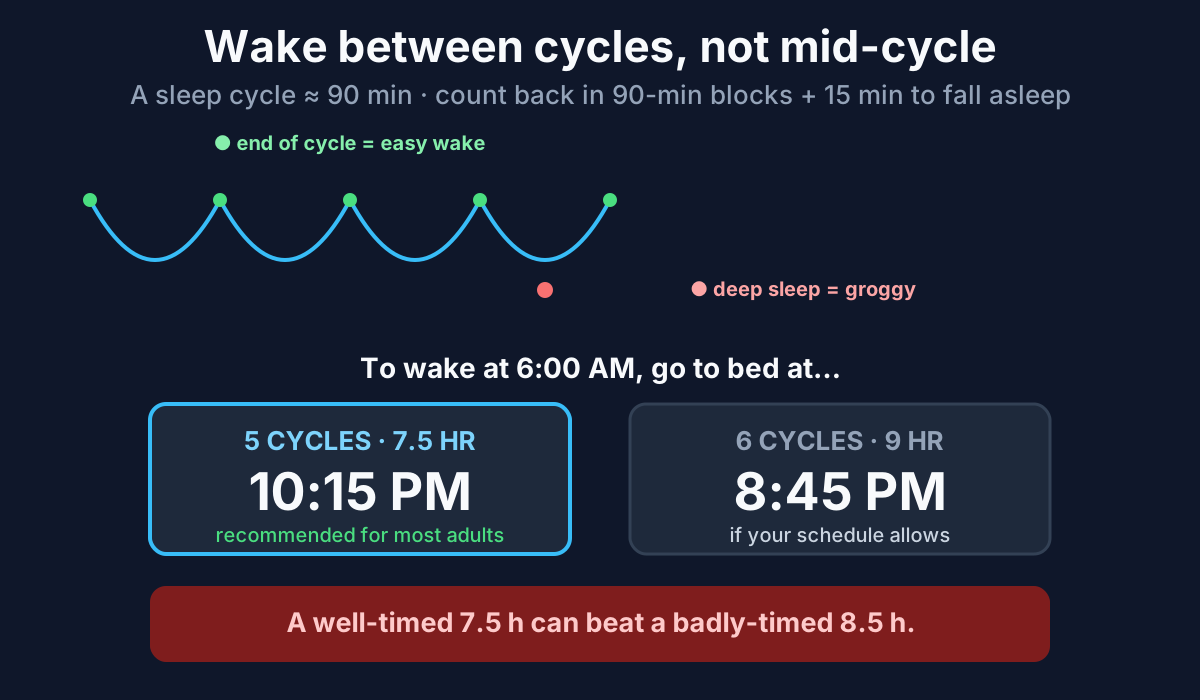
The 90-minute rule, in one line
During the night you don’t sleep at one steady depth. You move through cycles of roughly 90 minutes, each running from light sleep down into deep sleep, up into REM (dreaming), and back. You repeat that four to six times a night.
The practical upshot: plan your night in 90-minute blocks, and aim to wake at the top of a cycle. Being woken from deep sleep, mid-cycle, is what produces “sleep inertia”, the disoriented, heavy grogginess that can linger for half an hour or more. Being woken from light sleep, at a cycle boundary, barely registers.
The sleep calculator does the arithmetic in both directions, enter a wake time to get bedtimes, or a bedtime to get wake times.
What time should I go to bed? (Bedtime chart)
Working back from your wake-up time, allowing 15 minutes to fall asleep:
| Wake up at | 6 cycles (9 h) | 5 cycles (7.5 h) | 4 cycles (6 h) |
|---|---|---|---|
| 6:00 AM | 8:45 PM | 10:15 PM | 11:45 PM |
| 6:30 AM | 9:15 PM | 10:45 PM | 12:15 AM |
| 7:00 AM | 9:45 PM | 11:15 PM | 12:45 AM |
| 7:30 AM | 10:15 PM | 11:45 PM | 1:15 AM |
| 8:00 AM | 10:45 PM | 12:15 AM | 1:45 AM |
The bold 5-cycle column is the sweet spot for most adults. Pick 6 cycles if your schedule allows; drop to 4 only on a short night. If you fall asleep faster or slower than 15 minutes, adjust, the calculator lets you set your own sleep latency.
What time to wake up if I go to bed now
Going the other way is just as useful when you’re already tired. From the moment you’re actually asleep, add 90-minute blocks:
| Fall asleep at | 4 cycles (6 h) | 5 cycles (7.5 h) | 6 cycles (9 h) |
|---|---|---|---|
| 10:00 PM | 4:00 AM | 5:30 AM | 7:00 AM |
| 11:00 PM | 5:00 AM | 6:30 AM | 8:00 AM |
| 12:00 AM | 6:00 AM | 7:30 AM | 9:00 AM |
Set your alarm for one of these rather than a random time, and the last thing your night does is lift you out of light sleep.
How much sleep do I need? (By age)
Cycle timing tells you when to wake; total need tells you how many cycles to aim for. The widely-used guidance:
| Age group | Recommended sleep |
|---|---|
| Newborns (0-3 months) | 14-17 hours |
| Infants (4-12 months) | 12-16 hours (incl. naps) |
| Toddlers (1-2 years) | 11-14 hours |
| Preschool (3-5 years) | 10-13 hours |
| School age (6-13 years) | 9-12 hours |
| Teens (14-17 years) | 8-10 hours |
| Adults (18-64 years) | 7-9 hours |
| Older adults (65+) | 7-8 hours |
For most adults that’s the 5-to-6-cycle range. Consistently getting less isn’t something you “catch up” on fully at the weekend, the debt accumulates.
Why do I wake up groggy even after 8 hours?
This is the question the cycle model answers best. If your alarm goes off in the middle of a cycle, while you’re in deep sleep, your brain is yanked out of its deepest state, and you get sleep inertia: reduced alertness, slowed thinking, and that “just been hit by a truck” fog. It typically clears in 15-30 minutes but can linger longer.
So an 8.5-hour night that ends mid-cycle can genuinely feel worse than a 7.5-hour night that ends between cycles. More hours in bed isn’t automatically better sleep, when you wake matters too.
How to wake up less groggy
- Time your alarm to a cycle boundary using the bedtimes above, often just a 15-20 minute shift.
- Get bright light immediately on waking (open the curtains, or step outside), it’s the strongest “wake up now” signal to your body clock. A sunrise alarm that brightens gradually helps too.
- Don’t hit snooze. Drifting back to sleep starts a new cycle you’ll interrupt again minutes later, often making grogginess worse.
- Move. A short walk or even standing up and stretching raises alertness quickly. Cold water on the face helps.
- Keep a consistent wake time, even at weekends, a steady rhythm makes waking easier than any trick.
Sleep hygiene that makes the cycles work
The calculator gives you target times, but the times only help if you actually fall asleep near them. The fundamentals:
- Screens off ~60-90 minutes before bed, blue light suppresses melatonin, delaying sleep onset.
- Keep the room cool and dark, around 60-67°F (16-19°C) suits most people. (A comfortable room also depends on humidity, see the dew point guide.)
- Consistent schedule, same bedtime and wake time daily trains your body to be ready.
- Watch late caffeine and alcohol, caffeine lingers for hours; alcohol helps you fall asleep but fragments the second half of the night.
Frequently asked questions
What time should I go to bed to wake up at 6 AM?
Around 10:15 PM. That gives you five 90-minute sleep cycles (7.5 hours) plus roughly 15 minutes to fall asleep, so your alarm lands at the end of a cycle rather than the middle of one.
How long is one sleep cycle?
A sleep cycle averages about 90 minutes, moving from light sleep down into deep sleep, up into REM, and back. Most people repeat this four to six times a night.
Why do I wake up groggy even after 8 hours of sleep?
That heavy, groggy feeling is sleep inertia, which happens when your alarm pulls you out of deep sleep mid-cycle. A well-timed 7.5 hours that ends at a cycle boundary can feel better than a badly-timed 8.5 hours.
How much sleep do I need by age?
Adults 18 to 64 generally need 7 to 9 hours, teens need 8 to 10, and older adults typically need 7 to 8. These are general ranges rather than strict rules.
How do I calculate my ideal bedtime?
Count back from your wake-up time in 90-minute blocks, then add about 15 minutes to fall asleep. For example, five cycles is 7.5 hours plus 15 minutes. The sleep calculator does this in both directions automatically.
Is 7.5 hours of sleep really better than 8?
It can be, because a round number of hours matters less than waking between cycles. Waking at a cycle boundary in light sleep leaves you clearer-headed than waking mid-cycle from deep sleep.